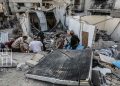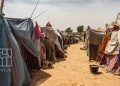

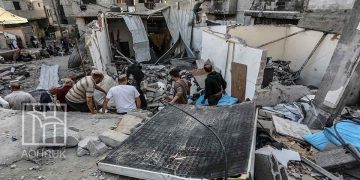

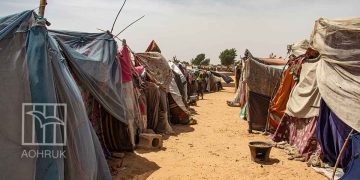

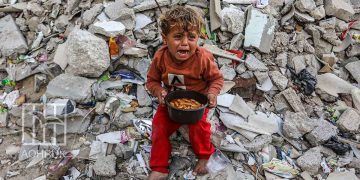


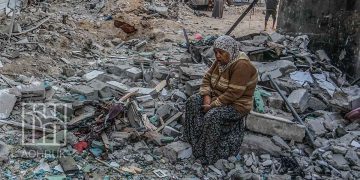

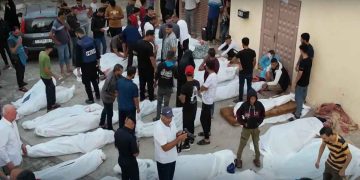







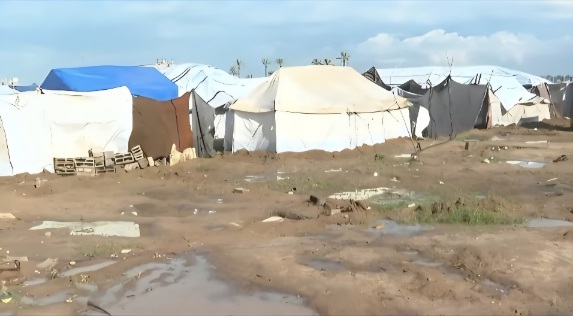
On Wednesday, the Gaza Strip witnessed yet another humanitarian disaster as torrential rains accompanying a severe weather front submerged thousands of makeshift tents housing displaced Palestinians. The storm, expected to last through Friday evening, has exacerbated the suffering of hundreds of thousands of families who lost their homes during the past two years of war.
Heavy rainfall began at dawn, causing water levels inside tents to rise up to 40 centimetres in some areas. The flooding destroyed what little property the displaced had left and rendered it impossible to stay dry or warm, with no infrastructure in place to drain the water.
Displaced residents described a harrowing night during which they lost the few blankets and mattresses they owned. They are now unable to protect their children from the cold and rain. Urgent appeals for rescue operations have been circulating widely, as large displacement zones remain submerged.
In a recorded statement, Gaza Civil Defence spokesperson Mahmoud Basal warned of an “imminent humanitarian catastrophe,” stating: “We will witness drownings and see the disaster unfold before our eyes if the world does not act urgently.” He highlighted the limited rescue capabilities amid severe shortages of equipment due to Israeli months-long blockade.
The Government Media Office had already warned, on Tuesday, of a polar depression threatening hundreds of thousands of displaced families. It stressed that most displacement areas consist of random encampments built on unprepared ground, making the tents prone to collapse and flooding at the first sign of rain.
The office added that the harsh climate conditions further compound the ongoing humanitarian catastrophe caused by Israeli genocidal war, ongoing since 8 October 2023, which has destroyed vital housing and infrastructure and left temporary camps as the only shelter for millions.
These developments reveal the extent of Gaza’s humanitarian collapse, especially as current tents offer no protection whatsoever in line with international humanitarian law, which obligates occupying powers to provide safe shelter, allow aid access, and prevent life-threatening conditions for civilians.
Despite urgent needs, Gaza still requires a minimum of 300,000 tents and prefabricated housing units to meet shelter demands, while the entry of construction materials and essential humanitarian supplies remains blocked.
The UN estimates that rebuilding Gaza will cost around $70 billion due to the extensive destruction from two years of Israeli attacks, which have killed more than 70,000 Palestinians, injured over 171,000, and left survivors in conditions deemed life-threatening by international human rights standards, vulnerable even to the first wave of cold or rain.
Gaza’s crisis is multi-layered: war has demolished homes, a siege has prevented rebuilding, camps are uninhabitable, and now the rains have fully exposed this fragility, all amid a deafening silence from the international community.