



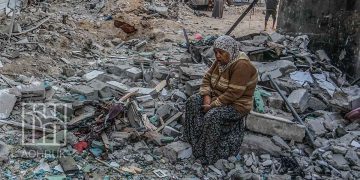





The policy of demolition and forced displacement continues to escalate across the occupied West Bank, in a scene that reflects the accelerating erosion of Palestinians’ fundamental rights, foremost among them the right to adequate housing and a dignified life.
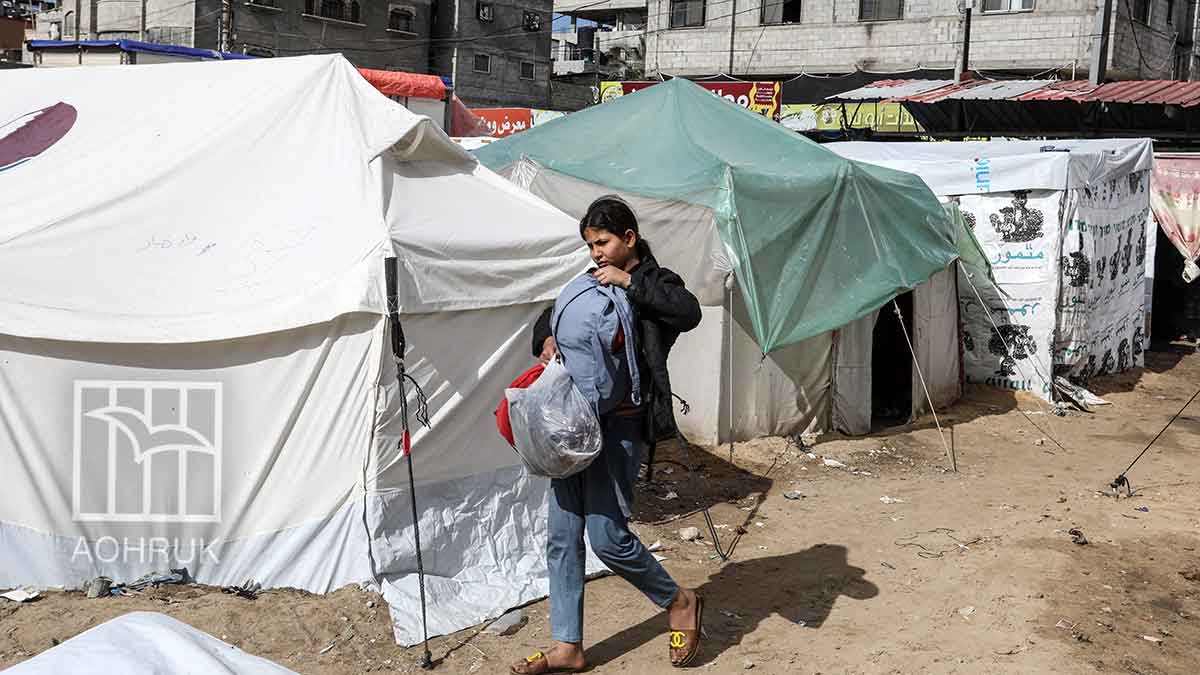
In this context, the United Nations announced that Israeli occupation authorities have displaced more than 1,000 Palestinians since the beginning of the current year in areas classified as Area C, which constitute around 60 per cent of the West Bank’s total area, as a result of the demolition of homes and facilities.
Speaking at a press conference, the UN Deputy Spokesperson for the Secretary-General, Farhan Haq, said that the demolitions driving this displacement are carried out under the pretext of “lack of permits”, noting that the current figures represent the second-highest annual rate of displacement recorded since 2009.
He added that attacks by the Israeli army and settlers in the West Bank have increased markedly over the past two years, coinciding with the devastating war on the Gaza Strip.
The impact of these operations is not limited to the loss of shelter alone; it extends to the dismantling of Palestinian families’ social and economic foundations, forcibly pushing them into internal displacement often without alternative housing or compensation, and under harsh humanitarian conditions.
Most of the demolished homes are located in rural and Bedouin communities that depend on agriculture and livestock farming, rendering displacement a double blow to both housing and livelihoods.
These practices constitute a direct violation of the principles of international humanitarian law, which prohibit an occupying power from making permanent changes in occupied territory or forcibly transferring the population, whether directly or indirectly. Discriminatory planning policies, which make obtaining building permits for Palestinians virtually impossible, strip the notion of “licensing” of any genuine legal meaning and transform it into a tool of collective exclusion.
At the same time, Palestinians in Area C are denied the right to build or rehabilitate their agricultural land, while systematic settlement expansion continues, thus deepening spatial segregation and discrimination based on national identity, and undermining any real prospect for independent Palestinian development or geographic continuity.
Demolition operations also extend to occupied East Jerusalem, where the same policies are used to reduce the Palestinian presence and push residents out of their city, in violation of the rights to housing and property, and of Jerusalem’s special legal status as occupied territory.
Ultimately, the rising number of displaced people exposes a sustained policy that goes far beyond administrative measures, striking at the core of the basic rights guaranteed to populations living under occupation. In the absence of genuine accountability, forced displacement persists as a daily reality imposed on Palestinians, amid international silence that falls far short of the scale of the violations and their long-term human and territorial consequences.