












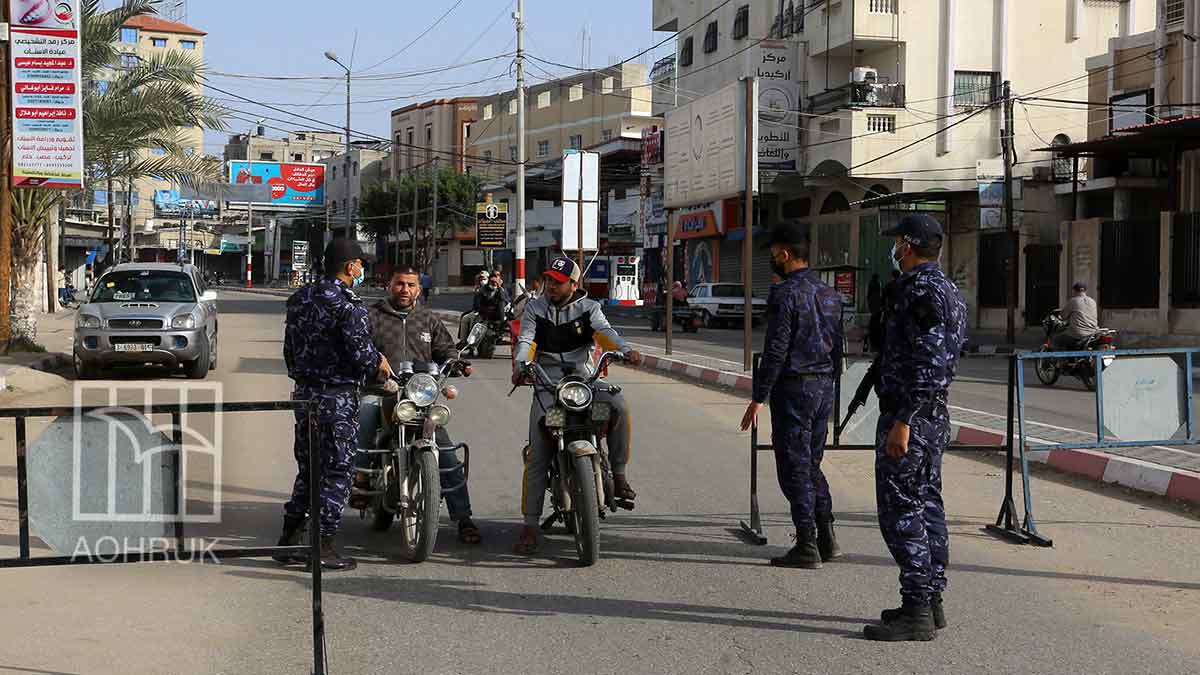
Cities and refugee camps across the West Bank have witnessed, in recent days, a series of arrests and raids carried out by the Palestinian Authority’s security services, targeting released prisoners, civilian youths, and journalists. These developments reflect a dangerous escalation in the targeting of individual and public freedoms and raise serious legal questions regarding the legitimacy of such practices and their broader implications.
In a notable development, the PA’s General Intelligence arrested former prisoner Baher Hawash from his workplace, before deciding to extend his detention for 15 days without providing clear legal grounds or publicly announced charges. This places the arrest within the scope of arbitrary detention, particularly given his previous history of imprisonment by the Israeli occupation.
In Tulkarm Governorate, PA security forces arrested Hazem Maamoun al-Qaisi, a young man from Nur Shams refugee camp, after luring him through what was described as a deceptive method.
According to available information, individuals contacted al-Qaisi — who works as a metalworker — claiming to be workshop owners in need of measurements for a job. Upon arriving at the agreed location, it became clear that the group belonged to the PA security services, and he was arrested in an area far from his home, in Jabal al-Nasr inside the camp. This area is known for the presence of Israeli occupation forces, further compounding the risks surrounding the incident and its circumstances.
In Jenin, PA intelligence arrested journalist Qusai Yousef al-Karam after raiding his home in the town of Jalqamous and tampering with its contents. The move constitutes a direct infringement on press freedom and media work, as well as a violation of the sanctity of the home, carried out without the presentation of clear judicial warrants justifying either the raid or the arrest.
These practices stand in contradiction to the fundamental principles enshrined in Palestinian law, which guarantee personal liberty, prohibit arrest or detention except by judicial order, and require that detainees be informed of the reasons for their arrest and allowed to contact their lawyer and family. Luring citizens into arrest through deception, or raiding homes without legal safeguards, represents a serious breach of the rule of law and undermines trust between citizens and official institutions.
The arrest of journalists on the basis of their work or opinions, and the detention of former prisoners due to their past political or resistance history, constitutes a direct assault on freedom of expression, freedom of opinion, and the right to work, creating an atmosphere of fear and repression within society.
Such violations, occurring within a Palestinian reality already burdened by occupation, further compound citizens’ suffering and weaken the internal social fabric, rather than providing protection in the face of ongoing Israeli violations.
The continuation of this approach risks entrenching arbitrary detention as a tool for social control outside proper judicial frameworks. It necessitates a comprehensive review of security practices, ensuring their subordination to the law and respect for human rights, in a manner that safeguards Palestinians’ dignity and freedoms and prevents security institutions from becoming actors that violate rights instead of protecting them.