















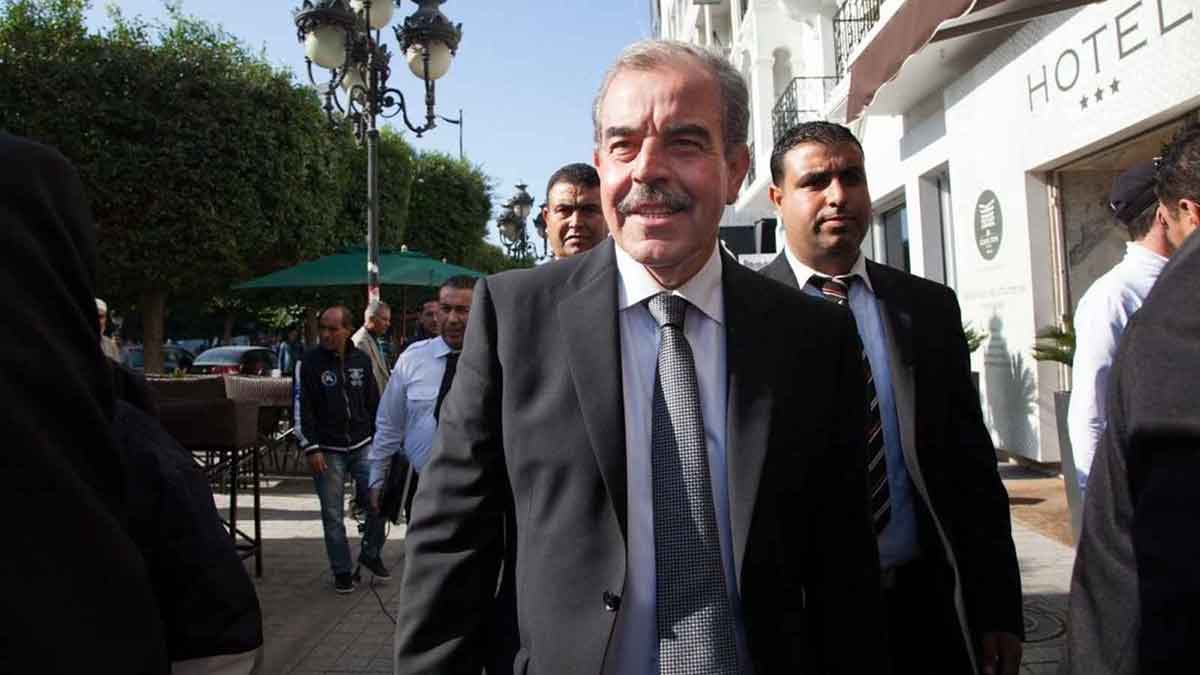
A Tunisian court specialising in terrorism-related cases has issued an in absentia ruling sentencing former minister Mondher Znaidi to 19 years’ imprisonment with immediate effect, on charges including “conspiracy against state security” and “forming a terrorist organisation”. The move marks yet another step in the instrumentalisation of the judiciary as a political tool to punish opponents, entrenching selective justice in Tunisia.
Znaidi, who held ministerial posts in pre-2011 governments, is regarded as one of the most prominent political figures opposed to President Kais Saied. His name has now been added to a long list of opponents pursued through the courts since the consolidation of an individualised presidential system following 25 July 2021.
The cases in which Znaidi was convicted fall within what have become known as the “conspiracy against state security” files in cases that have been politically and legally expanded to encompass peaceful political activity, political communication, and the expression of opinion, without the presentation of clear criminal evidence or material acts rising to the level of the alleged crimes. As a result, the charges are transformed into instruments of deterrence rather than mechanisms of justice.
An in absentia ruling in a case of a political nature constitutes a blatant violation of fair trial standards and reflects the subjugation of the judicial process to the will of the executive authority, undermining judicial independence and turning courts into platforms for rubber-stamping pre-determined political decisions.
Since 2023, Tunisia has witnessed a systematic judicial campaign targeting politicians, lawyers, journalists, and civil society activists, within a broader context of the organised dismantling of political life, the criminalisation of party and civic activity, and the drying up of the public sphere, all under a veneer of formal legality.
This campaign has been accompanied by the extensive use of counter-terrorism and state security laws, in a clear deviation from their original purposes, and their transformation into tools for criminalising political dissent. This constitutes a fundamental breach of civil and political rights and of the principle of criminal legality.
Tunisian courts have previously handed down harsh prison sentences against opposition figures, ranging from 10 to 45 years, in cases similar in wording and charges, thus confirming the existence of a uniform judicial pattern rather than independent judicial reasoning, and exposing the use of punishment as a means to silence opponents rather than to deliver justice.
The ruling coincides with a collective hunger strike launched by the Tunisian opposition in solidarity with lawyer Ayachi Hammami and other political detainees and prisoners of conscience, in protest against the conversion of prisons into instruments of political control and the criminalisation of free speech and public engagement.
In recent months, dozens of politicians and activists have been arrested in Tunisia and charged with broad and vague offences such as “undermining state security”, “collusion”, and “incitement”, which are charges used selectively to exclude opponents, outside any legal proportionality or judicial necessity.
What is unfolding in Tunisia does not merely reflect a crisis of justice, but a deliberate trajectory to subordinate the judiciary, reproduce authoritarianism through legal instruments, and hollow out rights and freedoms of their substance, amounting to a de facto reversal of the gains achieved after 2011.