

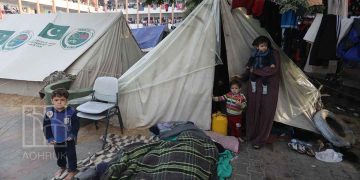



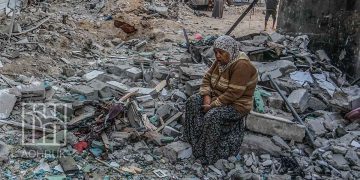








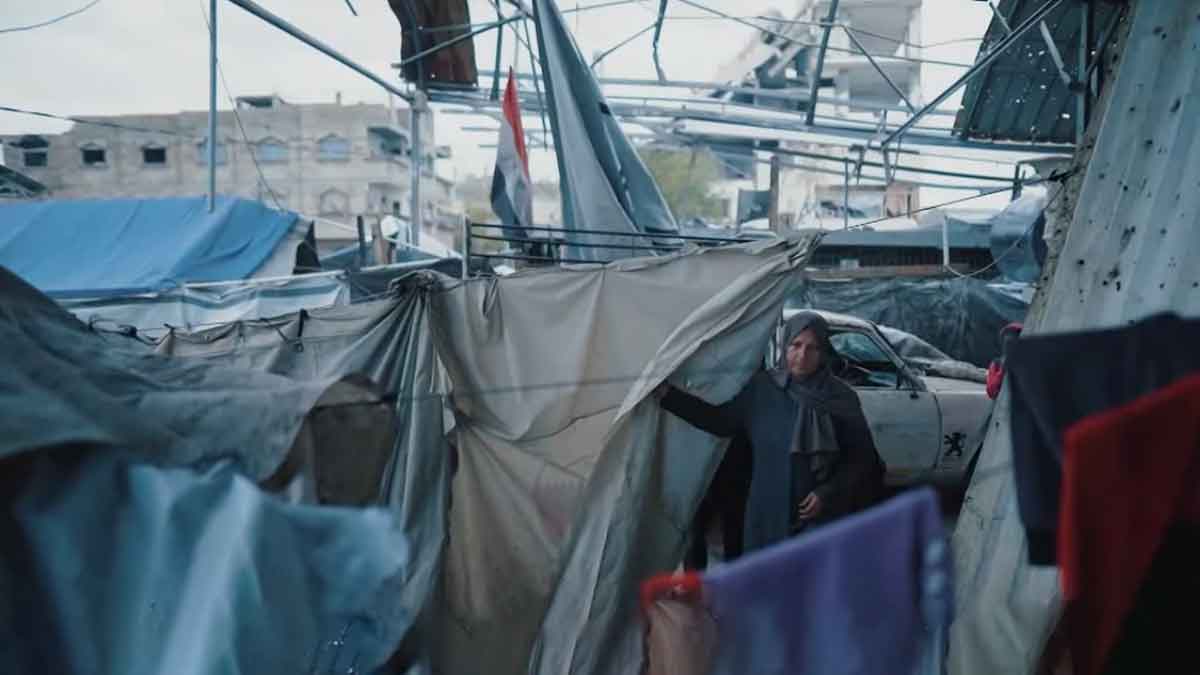
The Gaza Strip is facing a worsening humanitarian disaster as severe weather systems coincide with a destroyed infrastructure and forcibly imposed living conditions. This has led to the collapse of dozens of residential buildings and the flooding of the vast majority of tents sheltering displaced people, an alarming reflection of the fragile humanitarian reality and the lack of even the most basic civil protection measures.
According to Gaza’s Civil Defence, 18 residential buildings have completely collapsed, while more than 110 others have suffered serious partial damage, posing a direct threat to thousands of civilians. This comes amid a lack of resources for structural reinforcement or safe evacuation, and as harsh weather conditions continue.
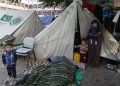
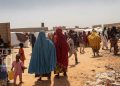
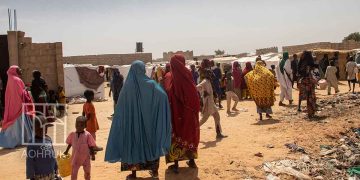
Strong winds and heavy rain have caused over 90% of displacement tents across the Strip to be submerged or blown away, leaving thousands of families homeless once again. Clothing, blankets, and mattresses were ruined, while children and the elderly are now exposed to life-threatening cold. The tents, it is confirmed, have failed to offer any real protection and have proven ineffective as even a temporary humanitarian solution in an environment of widespread destruction.
Civil Defence teams received more than 700 distress calls since the storm began, including requests to rescue people trapped in floodwaters, respond to building collapses, and deal with accidents involving wells and water collection pits, all with severely limited capacity and a critical shortage of equipment.
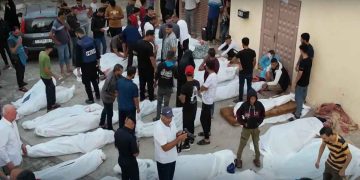
The storms have claimed the lives of 25 people, including six children who died from extreme cold. Others perished in building collapses or flood-related incidents, underscoring the direct link between harsh weather and the already dire humanitarian conditions imposed on Gaza’s population.
This disaster unfolds within a broader context of grave violations. Gaza’s population has been living for months without the minimum requirements for a dignified life due to the widespread destruction of homes and infrastructure, and the ongoing ban on shelter and reconstruction materials. Civilians are left to face preventable natural threats without protection or essential resources.
From a legal and human rights standpoint, exposing civilians to life-threatening conditions, denying them safe shelter, and leaving them vulnerable to floods and cold constitutes a clear violation of the right to adequate housing, life, and personal security, all of which are guaranteed under international humanitarian and human rights law and must not be suspended under any pretext.
Facts on the ground show that the continued prevention of reconstruction and reliance on fragile, unsuitable relief efforts only deepens the disaster, turning natural elements into tools of indirect killing, particularly for children and the most vulnerable.
Since 7 October 2023, Israeli occupation has maintained its assault on the residents of Gaza, including acts of killing, starvation, destruction, forced displacement, and arbitrary detention, in defiance of international appeals and International Court of Justice orders to halt the attacks.
This onslaught has resulted in over 242,000 Palestinians killed or wounded, most of them women and children, more than 11,000 missing persons, hundreds of thousands displaced, famine claiming numerous lives (mainly children), and near-total destruction of cities and residential areas in what is now one of the worst modern humanitarian catastrophes.
With conditions continuing to deteriorate, fears are mounting of a worsening disaster should more extreme weather occur, unless the siege is lifted, reconstruction is allowed, and urgent measures are taken to provide safe, dignified housing and protect civilian lives.