







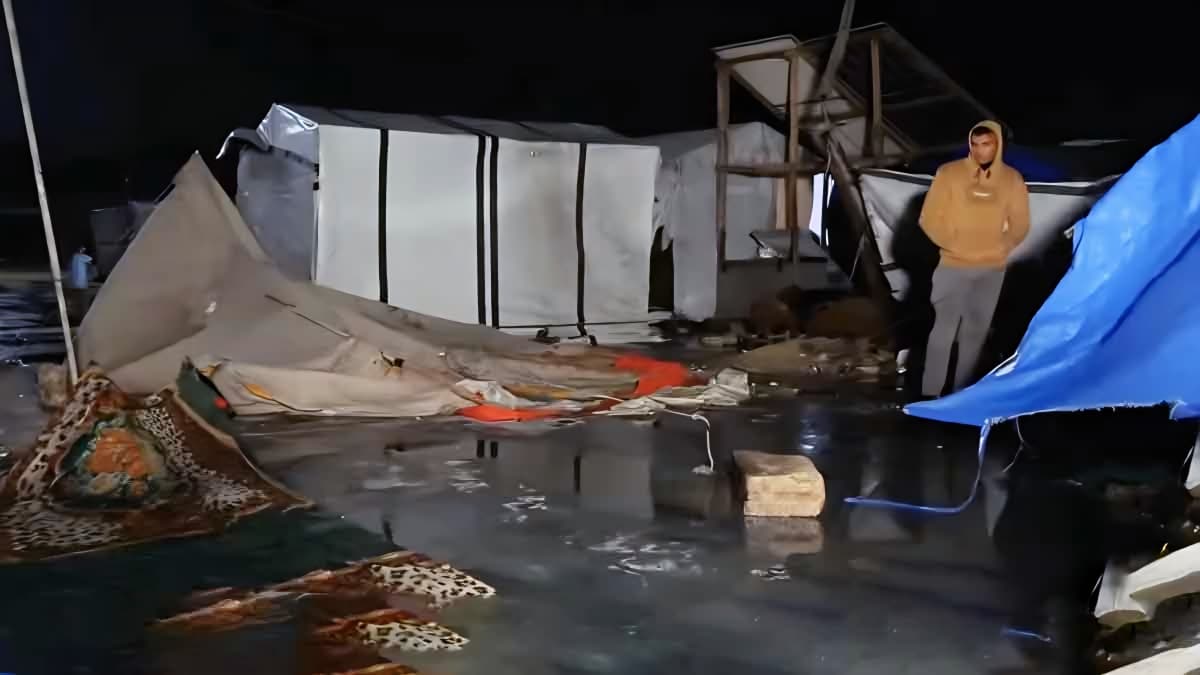
The prevailing weather conditions and a deep low-pressure system affecting Palestine have compounded the suffering of residents in the Gaza Strip, as strong winds and heavy rainfall have injured a number of civilians and destroyed the shelters of many families.
In the town of Beit Lahia in the north of the Strip, a child was injured after a wall collapsed on him as a result of the powerful winds accompanying the storm. Floodwaters also inundated tents sheltering displaced people in low-lying areas, while other tents were torn away by the winds, forcing families, including children, to flee into the open amid bitter cold and violent gusts.
Displaced people are living in extremely harsh conditions, with thousands residing in tents made of nylon and thin fabric that provide virtually no protection from rain or storms. Many are staying in roads, playgrounds, public squares and schools, without any means of shielding themselves from freezing temperatures or severe weather.
The crisis is further aggravated by the lack of fuel, leaving families unable to secure any form of heating as night-time temperatures fall. With no alternatives, some civilians have taken refuge in cracked and structurally unsafe buildings at risk of collapse, after the Israeli army destroyed most buildings and barred the entry of mobile homes and construction and reconstruction materials.
International humanitarian law obliges all parties to protect civilians and essential civilian infrastructure, including the provision of safe shelter and dignified living conditions, especially during natural disasters. Depriving the population of even the minimum means of protection, or forcing them to live in unfit tents or buildings threatened with collapse, constitutes a clear violation of the principles of humanitarian protection and fundamental human rights.
This crisis lays bare the fragility of civilian protection in the Gaza Strip and the urgent need for immediate intervention to provide shelter, fuel and essential supplies, to protect children and families from storms and extreme cold, and to ensure that weather conditions are not used as a pretext to evade humanitarian obligations towards civilians.