



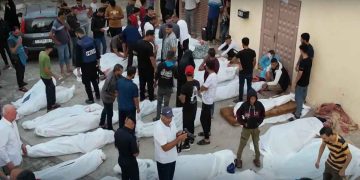




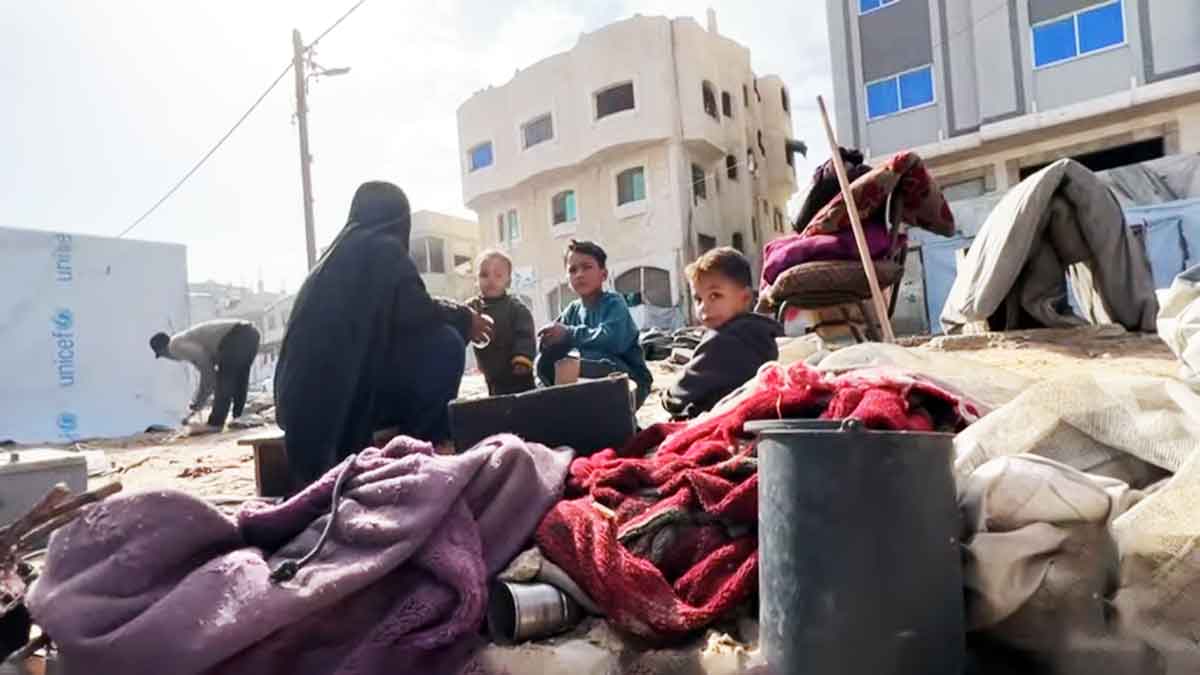
In the Gaza Strip, death does not come from a single direction. It arrives through bombardment and gunfire, creeps in with bitter cold, and becomes entrenched through siege and the obstruction of aid. As civilians are killed by Israeli occupation fire, children die in tents from exposure due to the absence of shelter and heating — a scene that reveals a dangerous convergence of military violence and humanitarian collapse, turning daily life for Palestinians into an open struggle for survival.
Within the past 24 hours, a seven-day-old infant died in the city of Deir al-Balah in central Gaza as a result of severe cold and a sharp drop in temperatures, highlighting the lethal consequences of the deteriorating humanitarian conditions.
The number of deaths caused by the storm system and extreme cold in the Gaza Strip has now exceeded 15, as thousands of families remain unable to provide even minimal protection for their children.
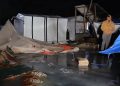
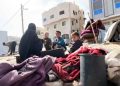
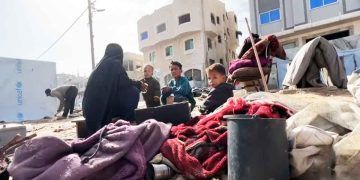
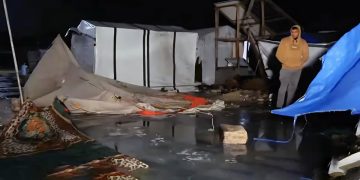
Tens of thousands of displaced people are living in dilapidated tents that are wholly unfit to withstand cold and stormy weather, amid the absence of safe shelter, severe fuel shortages, lack of heating, and the collapse of the health system. These conditions — imposed by widespread destruction and siege — have transformed natural weather phenomena into direct causes of death, particularly among infants, children, and the elderly.
In this context, the UN Relief and Works Agency for Palestine Refugees (UNRWA) has confirmed that children in Gaza continue to endure dire conditions as a result of the restrictions imposed by the occupation on the entry of humanitarian aid.
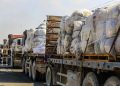
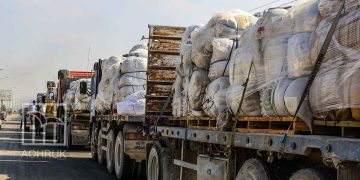
The agency stressed that children should be warm, well-nourished, and safe, yet they are being denied these basic necessities due to the continued blockage of aid stranded outside the Gaza Strip, despite the urgent need. UNRWA reaffirmed its readiness to scale up its humanitarian response immediately once the imposed restrictions are lifted.
Depriving children of food, warmth, and healthcare, and exposing them to life-threatening living conditions, constitutes a grave violation of the occupying power’s obligations under international humanitarian law and the Convention on the Rights of the Child, which mandate special protection for children and require the safeguarding of their survival and development in all circumstances.
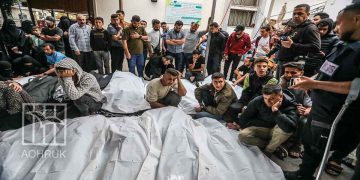
Alongside the humanitarian catastrophe, the occupation continues its direct killing of civilians across the Gaza Strip. Three Palestinians were killed and others injured in separate attacks targeting multiple areas.
In recent hours, one civilian was killed and another wounded in a drone strike near Bani Suheila roundabout in central Khan Younis, while two Palestinians were shot dead by occupation forces east of the Al-Zaytoun neighbourhood. Several civilians were also injured in shelling that struck the entrance of Al-Maghazi refugee camp in central Gaza, as occupation artillery continued to target areas south of Al-Mawasi, Rafah.
As a result, the number of Palestinians killed since the ceasefire came into effect has risen to more than 440, with over 1,200 injured. These figures cannot be reduced to mere breaches of political agreements; they represent flagrant violations of the right to life — a non-derogable right that cannot be suspended or restricted, whether in times of war or so-called de-escalation.
Killing through bombardment and gunfire, and leaving civilians — especially children — exposed to cold, hunger, and disease as a result of siege and the denial of aid, are interconnected actions that collectively produce death.
In Gaza, international law draws no distinction between a bullet that kills and a policy that deprives a child of warmth until death. Both constitute serious violations requiring accountability, and both reflect a humanitarian reality that can no longer withstand further silence.