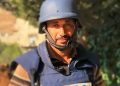
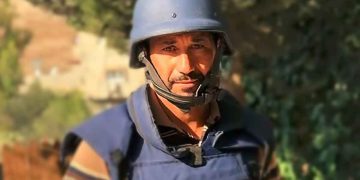





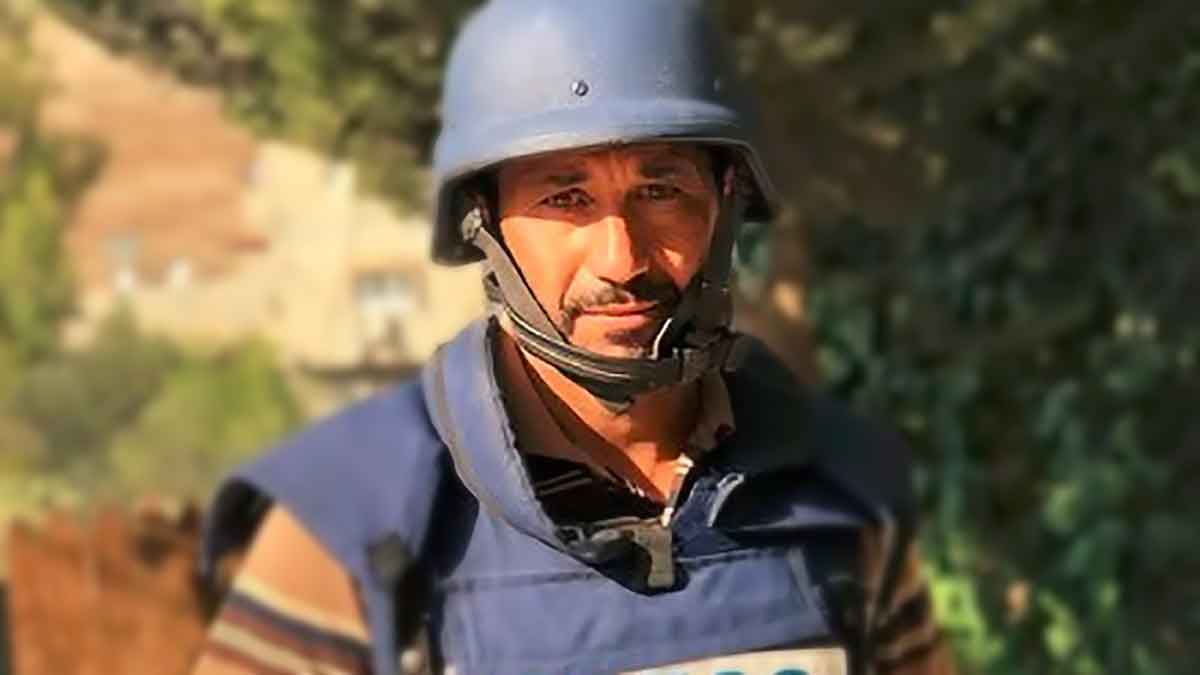
In the early hours of Tuesday, Israeli occupation forces (IOF) arrested Palestinian journalist Mohammed Abu Thabet, 46, from his home in Beit Dajan, east of Nablus in the northern occupied West Bank. The incident once again highlights the precarious state of press freedom in the occupied territories, amid growing restrictions and repeated arrests of media workers.
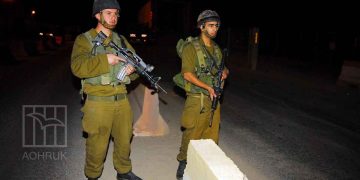
According to his father, Sheikh Radwan Abu Thabet, a large IOF military unit raided the building housing the family, broke into his son’s flat, and ransacked its contents. They subjected him to field interrogation about his journalistic activities before blindfolding and taking him to an undisclosed location.
Abu Thabet is a freelance journalist collaborating with several media outlets and volunteering for local radio stations. He regularly delivers field updates and commentary on military checkpoints and local developments, alongside his research on settlement issues. This is his first known arrest.
His detention comes just two days after two other journalists, Bushra Al-Tawil from Al-Bireh and Hatem Hamdan from Tulkarem, were detained at separate military checkpoints in the West Bank, indicating an expanding crackdown on media professionals, whether in their homes or during fieldwork.
The arrest of Abu Thabet was part of a wider arrest campaign across the West Bank on the same day, during which 25 Palestinians were detained in various towns and cities in the north and south of the territory.
Since 7 October 2023, over 220 cases of arrest and detention involving Palestinian journalists have been documented. Two remain victims of enforced disappearance, while the number of imprisoned journalists in Israeli jails currently stands at 44.
Wider statistics show that the number of Palestinian detainees in Israeli prisons has exceeded 9,350, including women and children, alongside thousands of administrative detainees held without charge or trial. Since October 2023, arrest cases in the West Bank alone have surpassed 21,000.
These figures raise serious questions about the state of press freedom under occupation. Journalists are supposed to enjoy special protection as civilian observers and conveyors of information, particularly while carrying out their professional duties.
The repeated night raids, warrantless house searches, and arbitrary detentions without formal charges undermine the right to personal liberty and the sanctity of the home, and violate fair trial guarantees.
Moreover, the widespread use of prolonged administrative detention without due process is legally controversial, contradicting fundamental principles of procedural justice and international human rights norms.