







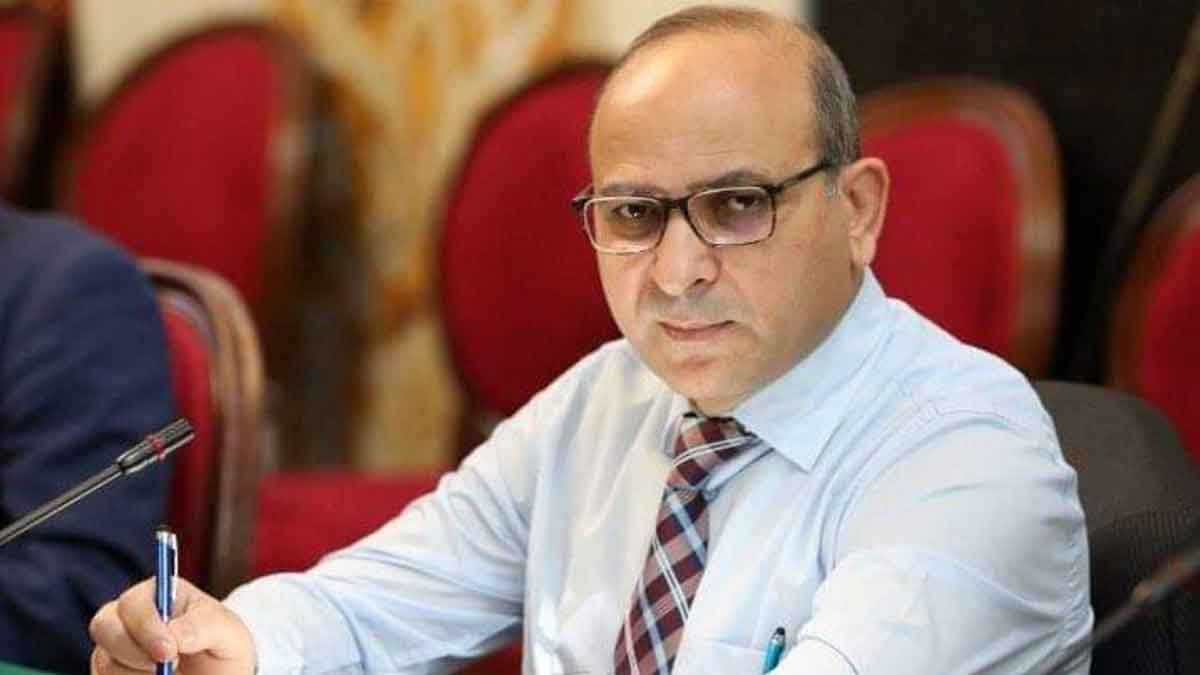
In a move that reflects the continued policy of constricting freedom of expression in Tunisia, the authorities have arrested former MP and writer Abdel Latif Al-Alawi, in a case stemming from criticisms he directed years ago at President Kais Saied and the military establishment.
The arrest, which was not accompanied by any immediate official clarification, has revived what is known in the media as the “poem case” and has reignited pressing questions about the boundaries of free speech and the instrumentalisation of the judiciary in settling political scores.
The origins of the case go back to Al-Alawi’s appearance alongside journalist Amer Ayad on a television programme broadcast on Zitouna TV, during which both men levelled sharp criticism at the president and the Tunisian army.
This was followed by the filing of serious charges, including “conspiracy against state security”, “committing a heinous act against the Head of State”, and “undermining the dignity and reputation of the national army”. Although the two were initially tried while at liberty, verdicts were later issued sentencing Ayad to two months in prison and Al-Alawi to one month, before the latter was re-arrested to serve the remaining term.
The case raises fundamental concerns regarding the essence of freedom of expression and the limits of the state’s authority to restrict it. Established international standards affirm that political criticism, even when harsh or unsettling, lies at the very heart of the right to free expression, and may only be criminalised in extremely narrow circumstances related to direct incitement to violence or hatred.
By contrast, turning vague notions such as “the prestige of the state” or “the dignity of the military institution” into tools for incarcerating opponents constitutes a dangerous deviation from the philosophy of law, which is meant to protect citizens from the arbitrariness of power, not to protect power from the words of its citizens.
Moreover, the revival of old files linked to media statements made years ago raises suspicions of selective law enforcement and reinforces the perception that the judiciary is summoned when political expediency demands it, not when justice requires it. Such a pattern strikes at the core of legal certainty and fosters a climate of self-censorship among writers, journalists, and politicians, in which the spoken or written word becomes a risk with deferred consequences.
At its core, the scene extends beyond the person of Abdel Latif Al-Alawi to touch upon the very structure of the relationship between authority and public opinion in Tunisia. A state that resorts to prosecutions and custodial sentences in response to critical speech sends a clear message: the ceiling of what is permissible is not defined by law so much as by the ruler’s approval. When expressing an opinion becomes grounds for imprisonment, any meaningful talk of a state governed by the rule of law loses its substance, and the judiciary is transformed from a guardian of rights into an instrument of political discipline.
In this context, Al-Alawi’s case appears as yet another example of the deployment of elastic legal provisions to muzzle voices that trouble those in power, instead of advancing modern legislation that balances the protection of institutions with the safeguarding of freedoms. Democracies are not measured by their ability to silence their critics, but by their capacity to endure harsh criticism without brandishing the threat of prison.