











Amid an escalation in demolition and forced eviction measures across the West Bank, human rights concerns are mounting over the impact of these policies on the rights to housing, personal security, and community stability. The scope of those affected continues to expand, encompassing entire families, agricultural assets, and inhabited residential buildings, placing thousands of civilians in a complex humanitarian and legal situation.
On Tuesday, Israeli occupation forces issued demolition notices for four homes in the village of Al-Kum, west of Hebron. The properties belong to Ahmad Mahmoud Mustafa Al-Rajoub, who owns two houses—one of which is inhabited, as well as Mohammad Mahmoud Mousa Al-Rajoub and Hani Mustafa Al-Rajoub.
According to local sources, such notices form part of a recurring policy targeting areas near the separation barrier, often accompanied by restrictions on construction, constraints on agricultural activity, and on-the-ground violations including raids, arrests, and harassment.
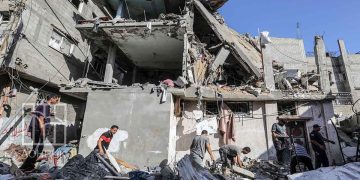
In parallel developments, demolition operations continued across several West Bank governorates, affecting homes, agricultural structures, and residential buildings.
In Jenin, the home of Raafat Dawasa in the town of Al-Silah Al-Harithiya was demolished after neighbouring houses were evacuated. The demolition followed prior notice to the family. The town also witnessed simultaneous incursions and the closure of its entrances. Dawasa had been killed in August 2024 following a strike on a vehicle he was travelling in with Ahmad Abu Arra.
In Jerusalem, agricultural structures were demolished in the Arab al-Jahalin area east of the city, causing financial losses for farmers amid ongoing complaints of targeted agricultural activity and the confiscation of equipment and property.
In Nablus, a two-storey home in the Upper Ta’awun area, owned by Yasser Al-Saber, was demolished. He stated that his family had been forced to vacate the property weeks earlier after receiving a demolition order, despite the existence of maps which, according to him, indicate a different zoning classification. Al-Saber estimated his losses at over 250,000 Jordanian dinars, noting that approximately 14 inhabited homes have been demolished in the area over the past two years.
In Bethlehem, a two-storey residential building comprising four flats in the town of Al-Khader was demolished on the grounds of lacking a permit. The operation was accompanied by area closures, movement restrictions, and the use of tear gas and sound bombs, contributing to heightened tension among residents.
Local sources in the Jordan Valley also reported that settler attacks have forced around 15 families to dismantle their homes in preparation for displacement. This follows the recent departure of seven other families from nearby communities under similar circumstances, amid reports of livestock being released onto agricultural lands under the protection of Israeli occupation forces.
From an international human rights and legal perspective, these developments raise serious concerns regarding the prohibition of forced displacement of civilians in occupied territory, as well as the rights to adequate housing and the protection of private property. These principles are firmly established in international humanitarian law and the Geneva Conventions, which require an occupying power to protect the civilian population and prohibit permanent changes affecting demographic composition or private property, except for narrowly defined and temporary military necessity.
Moreover, the repeated issuance of demolition orders on the basis of lacking permits, within areas already subject to restrictive planning regimes, raises questions about proportionality and non-discrimination in the application of the law, and the extent to which such measures align with international human rights standards guaranteeing family and economic stability and protection from collective punishment.
Ultimately, the impact of demolitions and forced evictions extends far beyond the loss of shelter, affecting livelihoods, education, and access to healthcare, while deepening the vulnerability of local communities. As such, these practices constitute not merely administrative or planning measures but raise broader legal and human rights concerns regarding the protection of civilians and their fundamental rights.