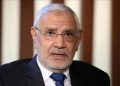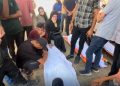



















In an incident that constitutes a grave violation of the right to life and healthcare, as guaranteed under both domestic and international law, Egyptian engineer Abdel Aal Ali Abdelrabbo Khodeira (67), former First Undersecretary of the Ministry of Transport, has died in detention at Borg El Arab Prison following a prolonged and severe deterioration in his health, without adequate medical intervention.
Egyptian authorities withheld news of his death, which occurred on 31 January 2026. He was buried the following day, 1 February 2026, in his hometown.
Khodeira, originally from Wardan village in Giza governorate and a father of ten, had been detained since 3 May 2016. Over the past year, he suffered from viral hepatitis and repeatedly complained of being denied timely and appropriate medical treatment. His condition worsened significantly, leading to blood poisoning and ultimately his death in custody.
His death reflects a recurring pattern of medical neglect in places of detention, which, under international legal standards, may amount to cruel, inhuman, or degrading treatment, particularly where detainees are denied necessary care despite authorities’ awareness of their deteriorating health.
The Egyptian Constitution explicitly guarantees human dignity and prohibits physical or psychological harm, while obliging the state to provide healthcare to all citizens without discrimination. Under prison regulations, authorities are required to ensure adequate medical care for detainees and to transfer them to specialised hospitals when necessary. Failure to meet these obligations constitutes not merely administrative negligence, but a direct violation of fundamental rights.
Internationally, the right to life is protected under the International Covenant on Civil and Political Rights. Furthermore, the UN Standard Minimum Rules for the Treatment of Prisoners (the Nelson Mandela Rules) require detention authorities to provide healthcare equivalent to that available in the community, ensure clinical independence, and prohibit the denial of medical care as a form of punishment. Any failure resulting in the death of a detainee from a treatable condition constitutes a clear breach of these obligations.
Detaining an elderly individual with chronic illnesses without providing effective medical care, leading to a preventable death, places full legal responsibility on the detaining authority. Given the state’s complete control over detainees, it bears a duty of care and protection. Any failure resulting in loss of life in custody is unjustifiable.
This case once again raises serious concerns regarding the treatment of elderly and chronically ill detainees in Egyptian prisons, underscoring the urgent need to activate mechanisms for medical release, not as an exceptional measure, but as a legal and humanitarian obligation that upholds human dignity and protects the right to life.
The death of Abdel Aal Khodeira highlights a structural failure in the provision of healthcare within detention facilities. Continued silence in the face of such cases risks entrenching a reality in which detainees’ lives are left at the mercy of neglect, an outcome fundamentally incompatible with constitutional guarantees, domestic law, and binding international obligations.