














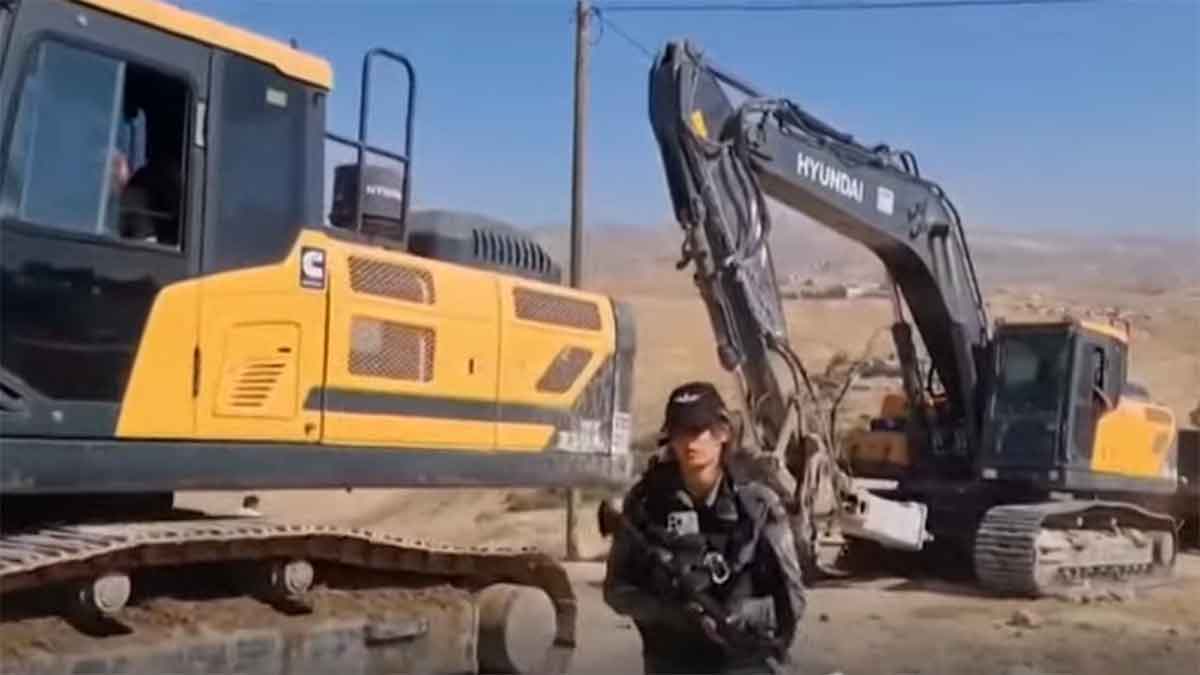
Israeli Occupation Forces served demolition notices on Wednesday against dozens of homes and structures across various parts of the West Bank, in a step that constitutes a grave violation of international laws and conventions governing human rights and the protection of civilians in occupied territory.
In the town of Nahalin, west of Bethlehem, 23 families received demolition notices covering their homes in the areas of Bakoush, Subayha, Wadi Salem and Waqrnat al-Da‘mas. They were given no more than 24 hours to submit legal appeals in an attempt to halt the demolition orders. The head of the municipal council warned that homeowners now face the imminent loss of their dwellings, a development that would compound their suffering and intensify social strain within the community.
IOF also distributed 10 demolition notices targeting agricultural greenhouses in the village of Bardala in the northern Jordan Valley, covering an area exceeding 40 dunums. These agricultural facilities rely primarily on irrigated farming. Their destruction poses a direct threat to the livelihoods of local families, deepening the humanitarian and economic crisis facing residents.
In a similar development, occupation bulldozers began demolishing a building and several commercial shops at the entrance to the village of Anza, south of Jenin, including a local café. The main road was sealed off, obstructing traffic to and from the city, reflecting the far-reaching impact of such measures on daily civilian life.
These actions form part of a broader pattern of violations of international humanitarian law, particularly the Geneva Conventions relating to the protection of civilians in occupied territories, which prohibit the destruction of private property absent clear military necessity. As an occupying power, Israel is obligated to safeguard the fundamental means of subsistence of the civilian population, including the rights to housing, employment and agricultural livelihood.
Collective demolition measures further amount to violations of internationally recognised human rights standards, encompassing the right to adequate housing, personal security and protection of property. They place a responsibility upon the international community to exert meaningful pressure to halt such practices and shield civilians from forced displacement.
Residents facing demolition endure profound psychological and social pressures, under the constant threat of losing both shelter and income. In the Jordan Valley in particular, the targeting of agricultural greenhouses jeopardises irrigated farming, a principal source of food production and household income, thereby compounding economic hardship.
These measures come within the context of an ongoing policy aimed at displacing Palestinian communities from their land, in the absence of effective international action capable of bringing the occupation to an end.