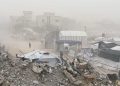
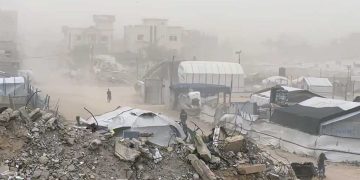













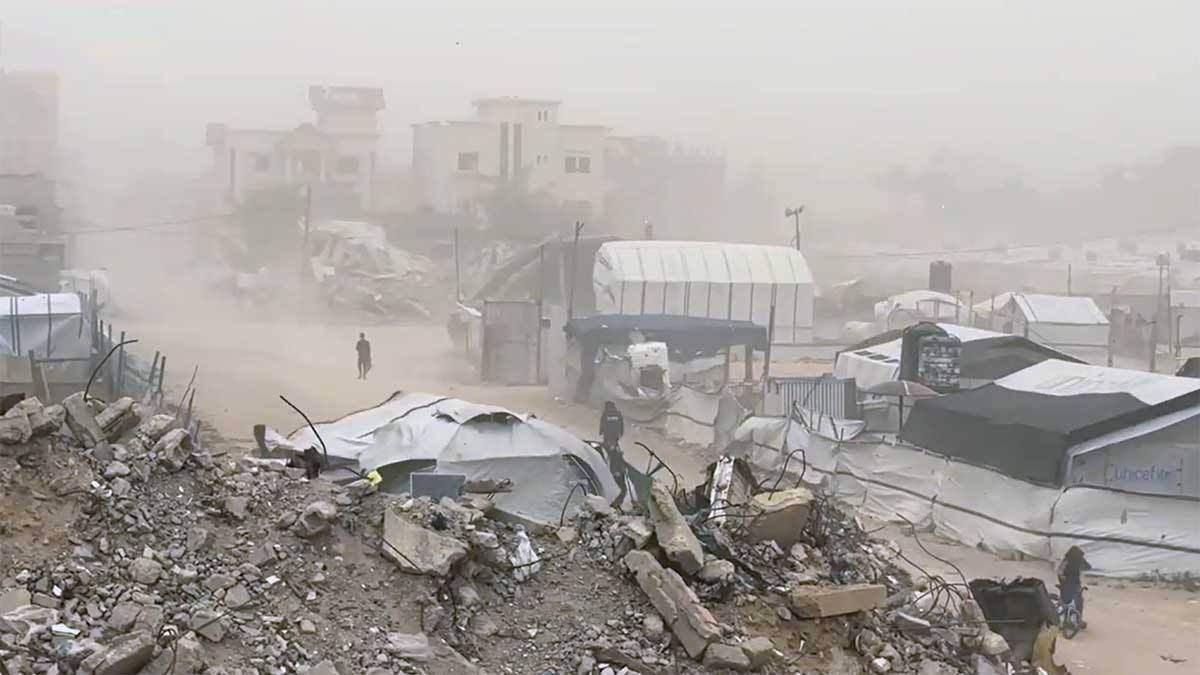
A dense sandstorm swept across all areas of the Gaza Strip on Saturday, causing torn and fragile tents to be blown away and inflicting widespread damage on temporary shelters and the belongings of displaced residents. The storm has also heightened health risks—particularly respiratory illnesses—amid the absence of adequate protection or safe shelter.
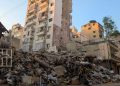
In Khan Younis in the southern Gaza Strip, two children were injured after a wall collapsed on them due to strong winds. In another incident, a cracked building wall fell onto a tent near Gaza’s seaport west of the city, while a palm tree was blown down onto another tent by the winds, according to local sources.
The Gaza Civil Defence reported receiving numerous distress calls from residents across different areas because of the harsh weather conditions and powerful winds. Rescue crews have been working around the clock to remove hazards from unstable poles, secure displaced persons’ tents, and assist families in limiting damage, despite extremely limited resources.
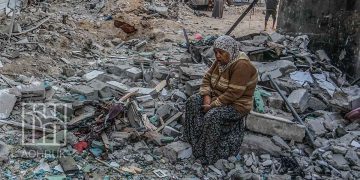
Approximately 1.9 million Palestinians out of Gaza’s 2.4 million residents are currently living in tents and temporary shelters after the war destroyed large portions of their homes and civilian infrastructure.
These conditions highlight the scale of the humanitarian and human rights failure by the occupying power to fulfil its legal obligations. International humanitarian law explicitly establishes the responsibility of the occupying power to protect civilians and ensure the delivery of essential humanitarian assistance, including safe shelter, food, and medical care, and to refrain from exposing civilians to harsh living conditions that threaten their lives and safety.
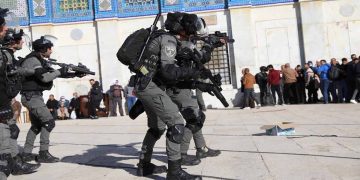
Despite the ceasefire agreement, Israeli occupation forces continue to violate their commitments daily through shelling and gunfire, while also preventing the entry of agreed quantities of food aid, humanitarian relief, medical supplies, and shelter materials. As a result, hundreds of thousands of civilians remain exposed to extremely harsh living conditions and additional natural hazards such as sandstorms.
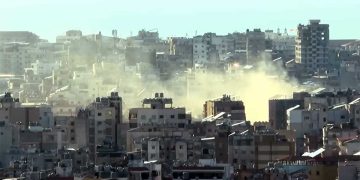
Since 7 October 2023, Israeli forces have waged a devastating war lasting two years, resulting in the deaths of more than 72,000 Palestinians and approximately 172,000 injuries, while destroying around 90 per cent of civilian infrastructure, including homes, schools, and hospitals.
The continuation of these conditions has led to an unprecedented escalation of humanitarian suffering, leaving the civilian population under constant threat to their safety and physical security, in clear violation of international humanitarian law and fundamental human rights principles.