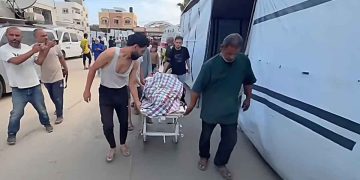

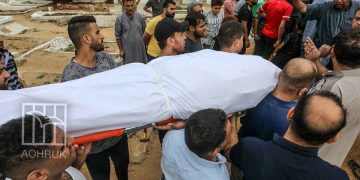



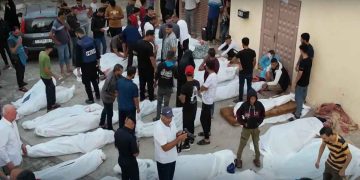







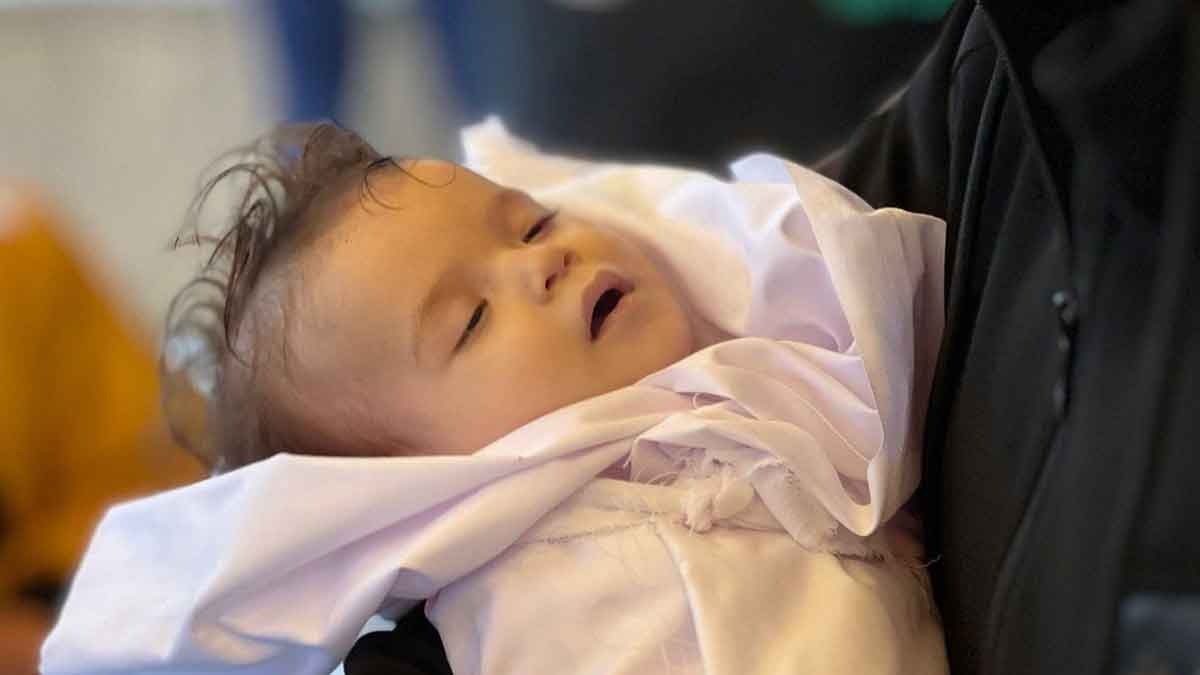
In yet another chapter of the ongoing humanitarian catastrophe in Gaza, eight-month-old Rahaf Abu Jazar passed away on Thursday in Khan Younis, southern Gaza, due to a bitter cold wave that has gripped the region for days.
Medical sources reported that the infant arrived at the hospital already deceased, her fragile body unable to withstand the harsh weather conditions, with no access to heating or shelter.
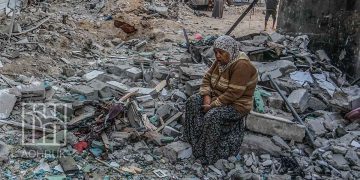
This heartbreaking incident underscores the total collapse of even the most basic necessities of life in a territory enduring a suffocating blockade and facing the worst humanitarian crisis in its modern history. Displaced families have been living for months in flimsy tents that offer no protection from rain or cold, with fuel and heating supplies entirely absent, and medical services operating at their lowest capacity.
Rahaf’s death is a direct consequence of the lack of civilian protection, leaving people unable to access warmth, shelter, food, or healthcare. International humanitarian law obliges parties to protect children—the most vulnerable group—and prohibits exposing them to life-threatening conditions.
Yet the reality in Gaza is a systematic failure to uphold these guarantees. Civilians are left to face winter’s chill without shelter, electricity, clean water, or a functioning healthcare system capable of treating even the simplest of emergencies.
Field testimonies describe thousands of families living in shelters that fail to meet the minimum safety standards. Rainwater seeps into tents, muddy streets flood refugee camps, and the risks of disease soar, especially for children exposed to freezing temperatures.
Relief agencies warn that overcrowding, combined with poor sanitation and a lack of healthcare, heightens the threat of respiratory infections, acute inflammations, and seasonal epidemics, posing a grave danger, particularly to infants and the elderly.
In this context, the UN’s Relief and Works Agency (UNRWA) confirmed that heavy rainfall is worsening the disaster, with flooded roads and leaking shelters intensifying the suffering of displaced people. The cold and overcrowding, they added, dramatically increase the spread of illness.
UNRWA stressed that this suffering is entirely preventable, if humanitarian aid were allowed to enter without restrictions. The delivery of proper shelter, fuel, and medical supplies is a legal and moral obligation upon the international community, which must act to prevent further tragedy.