















In a grave violation of the right to life and the principles of the rule of law, Ahmed Suleiman Eid al-Masoudi, 55, died inside a National Security Agency facility in the Sharqia Governorate.
Al-Masoudi, a merchant from the village of Basateen in Belbeis district, had been missing since 11 November. This came after a court issued a final and enforceable order for his release under precautionary measures. However, the order was not implemented. He was held outside any legal framework, without being presented to a prosecutor, and was denied contact with his family or legal counsel, clear violations of basic constitutional guarantees.
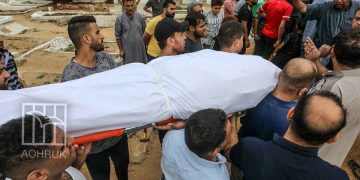
On Saturday, the family was informed of his death inside a security facility, following a complete period of disappearance during which no information was provided regarding his whereabouts or health condition. The family received the body after completing official procedures, and he was buried at dawn the following day.
The facts show that al-Masoudi was effectively in custody despite a release order, constituting both arbitrary detention and enforced disappearance under legal standards. The non-implementation of court release orders is not a matter of discretion but a binding legal obligation, and any refusal constitutes a standalone offence.
Al-Masoudi had suffered from severe health deterioration for years, yet his detention continued and he was recycled into successive cases since 2015, despite multiple prior release orders. His denial of necessary medical care while held in an undisclosed location represents a serious breach of the state’s duty to preserve the lives of individuals under its control.
Under national laws and binding international treaties, the authorities bear full responsibility for any harm or death occurring in detention facilities—whether due to torture, medical neglect, or inhumane conditions. This responsibility is not negated by the lack of an official announcement regarding the place of detention.
The death of Ahmed al-Masoudi inside a security facility after a period of enforced disappearance imposes full legal accountability for the circumstances of his detention and death. It demands a serious and transparent investigation to establish both individual and institutional responsibility and to ensure accountability.
This case stands as a stark example of the consequences of extra-legal detention, the danger of ignoring release orders, and the deadly outcomes of medical neglect inside detention centres. It calls for urgent and comprehensive reform to uphold human dignity and the rule of law without exception.