















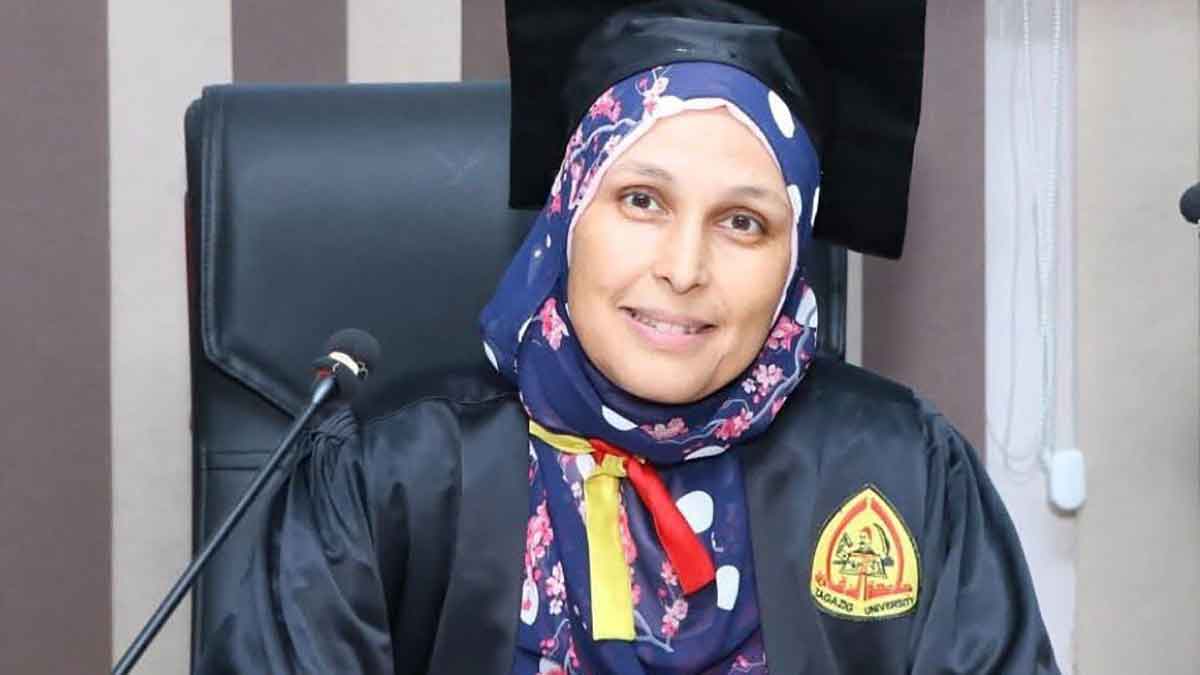
The health condition of Egyptian academic Dr Sherine Shawqi Ahmed Moawad, currently detained in Tenth of Ramadan Prison, is witnessing a grave deterioration that poses a direct threat to her life, as a result of harsh conditions of detention and deliberate medical neglect by the Egyptian authorities.
Dr Sherine recently suffered a complete collapse and lost consciousness, prompting her transfer to the prison hospital after being held in what is known as the admission ward, where she was forced to sleep on bare tiles without a mattress or blanket, in inhumane conditions that constitute a flagrant violation of the minimum humanitarian standards governing the treatment of detainees.
Medical examinations have revealed that she is suffering from severe anaemia, in addition to serious liver and heart complications, with a rapid decline in her health since 29 December until the present day. This has been compounded by intense psychological and nervous pressure as a result of her detention alongside prisoners convicted in criminal cases, a situation that has adversely affected her condition and contributed to its worsening.
It is worth noting that Dr Sherine is detained solely for defending her husband, who has himself been imprisoned for six years and suffers from serious health problems, including a tumour of the thyroid gland, placing him at similar risk due to medical neglect.
This deterioration in her health and the denial of appropriate medical care represent a direct violation of international humanitarian law and human rights conventions, which guarantee the right to life, access to healthcare, and humane treatment for detainees.
These instruments, including the Fourth Geneva Convention, impose upon the authorities the obligation to provide urgent and adequate medical care to all prisoners, irrespective of the nature of the charges against them, and prohibit any form of cruel or degrading treatment.
The continued deprivation of Dr Sherine of appropriate medical care, coupled with her detention in inhumane conditions, constitutes a direct threat to her life and amounts to a crime punishable under international law. Full responsibility rests with the prison administration for any complications or fatal consequences that may arise as a result of deliberate medical neglect.
In this context; the authorities must provide immediate and comprehensive medical care commensurate with the seriousness of her condition, transfer her without delay to a specialised hospital outside the prison should her health so require, cease all forms of inhumane treatment, respect her dignity and legal rights, and open an urgent and independent investigation into the incidents of medical neglect and violations to which she has been subjected.
The right to life and to healthcare is an inherent right that may not be infringed under any circumstances. The Egyptian authorities are bound to adhere to international standards to safeguard the lives of detainees and preserve their human dignity.