





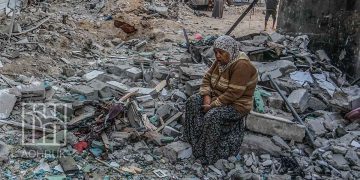









The humanitarian catastrophe in the Gaza Strip continues to deepen as the Israeli occupation maintains its restrictions on the entry of fuel, depriving essential facilities of the ability to function, endangering lives, and worsening the extensive destruction caused by the war.
Although the ceasefire was expected to ease suffering and allow for the restoration of basic services, the reality on the ground tells a starkly different story. Municipalities have effectively become the last line of defence against the total collapse of Gaza’s service infrastructure.
In this context, the Association of Municipalities in the Gaza Strip announced on Sunday that vital facilities are experiencing a “strangling” fuel crisis due to the occupation’s continued ban on diesel entry — despite more than 50 days having passed since the ceasefire came into effect.
The announcement came during a press conference held by Alaa al-Din al-Batta, Deputy Head of the Association and Mayor of Khan Younis, at a rainwater collection basin north of al-Amal neighbourhood. Al-Batta stated that the fuel received during this period “is sufficient for only five days of work,” at a time when municipalities urgently need to operate rubble-clearing machinery, open roads, and provide emergency services.
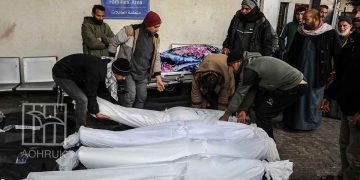
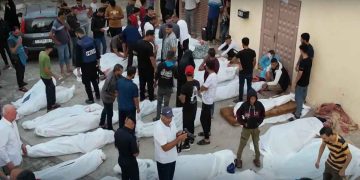
The continued denial of diesel entry constitutes one of the ongoing breaches of the ceasefire, which was intended to end the devastating war launched by the Israeli occupation in October 2023 — a war that resulted in the killing of more than 70,000 Palestinians and left 170,000 injured, most of them women and children.
Available data indicates that the ongoing fuel restrictions directly undermine residents’ fundamental rights — including the rights to health, water, sanitation, and a safe environment — all of which depend entirely on the availability of fuel to operate pumps, generators, and municipal machinery.
According to al-Batta, more than 85 percent of municipal facilities and equipment were directly destroyed during the war, leaving operational capacity on the brink of collapse. Under these conditions, the limited quantities of fuel entering through the UN Office for Project Services (UNOPS) “do not meet even the minimum” of municipal needs.
Al-Batta highlighted one of the most critical concerns: rainwater pumping stations. Without fuel, these stations cannot operate, posing a real threat of catastrophic flooding in densely populated areas and among displaced communities — especially with consecutive winter storms approaching.
Meanwhile, rubbish is piling up in makeshift sites, sewage is overflowing, and access to clean drinking water is shrinking — all indicators of a gradual breakdown of the service system that could escalate into a widespread public health and environmental disaster.
The Israeli blockade imposed on Gaza for years continues in blatant violation of international obligations requiring the facilitation of humanitarian aid and the protection of civilians.
Preventing the entry of fuel and essential equipment constitutes a form of collective punishment, further worsening the suffering of 2.4 million Palestinians and obstructing the restoration of basic services amid massive devastation and severe shortages of food, medicine, and medical supplies.