















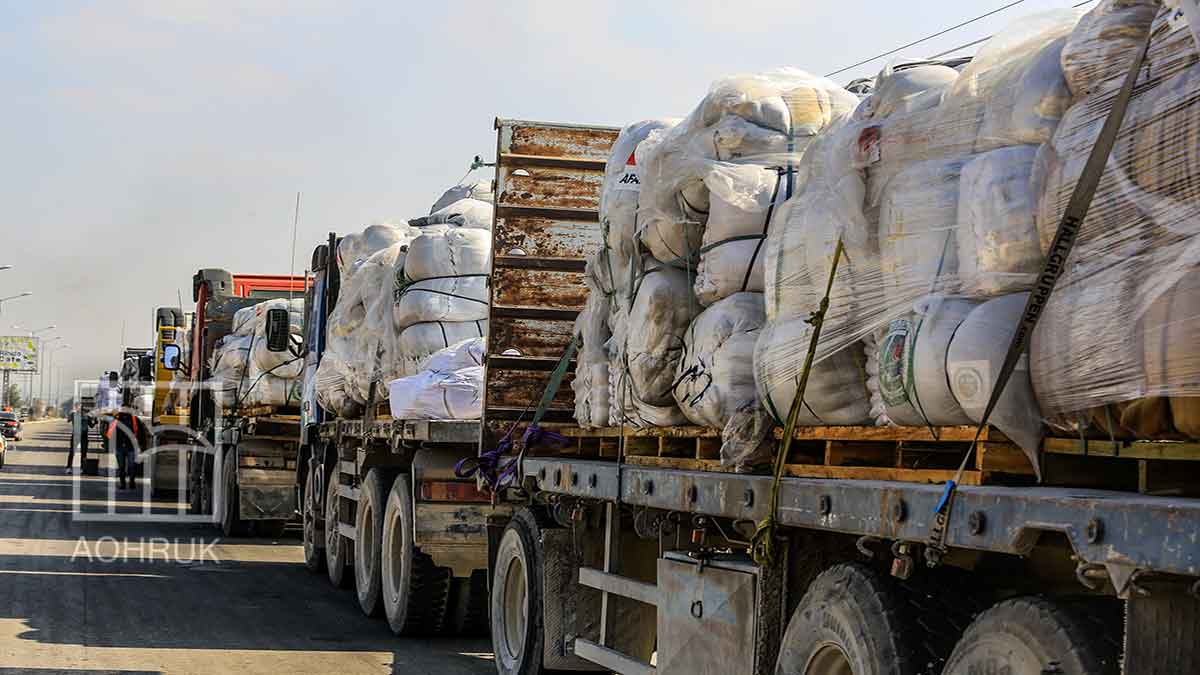
Despite the announcement of a ceasefire in the Gaza Strip, humanitarian conditions continue to face severe bottlenecks that strip the truce of its humanitarian substance, amid ongoing field restrictions that hinder the delivery of essential aid to hundreds of thousands of civilians.
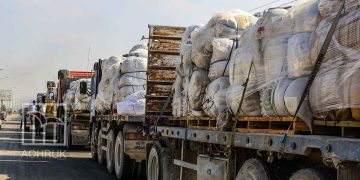
In this context, the United Nations Office for the Coordination of Humanitarian Affairs (OCHA) reported on Wednesday that fuel shortages and road closures are significantly slowing the humanitarian response in the Gaza Strip, despite the recent resumption of fuel shipments.
In its daily report issued from New York, the office explained that although fuel entry has resumed, persistent access constraints, severe congestion, and gaps in storage capacity continue to drive up the cost of humanitarian operations and delay the delivery of assistance to those in need.
The report noted that UN partners have been able to resume the distribution of monthly food rations for the first time since October 2023, reaching approximately 100,000 people, in a step described as limited when measured against the scale of humanitarian needs across the Strip.
From the perspective of international humanitarian law, the occupying power bears direct responsibility for ensuring unimpeded access to humanitarian assistance for the civilian population, as well as for providing the fuel and infrastructure necessary to sustain basic services, particularly in the aftermath of large-scale military operations. Restricting relief movements or disrupting supply chains constitutes a violation of the protection obligations imposed on an occupying power.
Moreover, the continued closure of roads and the imposition of access restrictions, even after the ceasefire, effectively transform the humanitarian situation into a form of indirect pressure on civilians and undermine the principle of distinction between military objectives and the civilian population. The impact becomes especially grave when it affects vital sectors such as health, food, and education, which are among the fundamental rights guaranteed to protected persons.
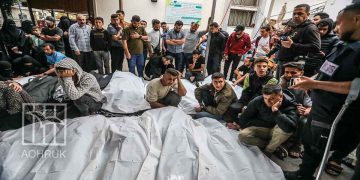
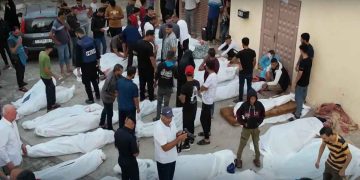
These developments unfold within an exceptionally complex humanitarian context resulting from a war of genocide waged by the occupation against the Gaza Strip since October 2023, which has caused widespread destruction of civilian infrastructure, including hospitals, road networks, and water and electricity facilities. As a result, any humanitarian response, no matter how expanded, remains incapable of meeting even minimum needs without the full lifting of imposed restrictions.
Against this backdrop, OCHA’s warnings underscore that a ceasefire, unless translated into freedom of movement for humanitarian actors, guaranteed fuel flows, and the reopening of roads, will remain a fragile measure, insufficient to prevent the further deterioration of the humanitarian catastrophe facing the population of the Gaza Strip.