


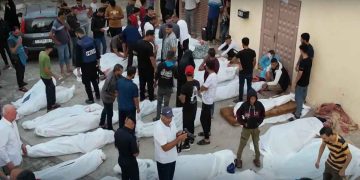






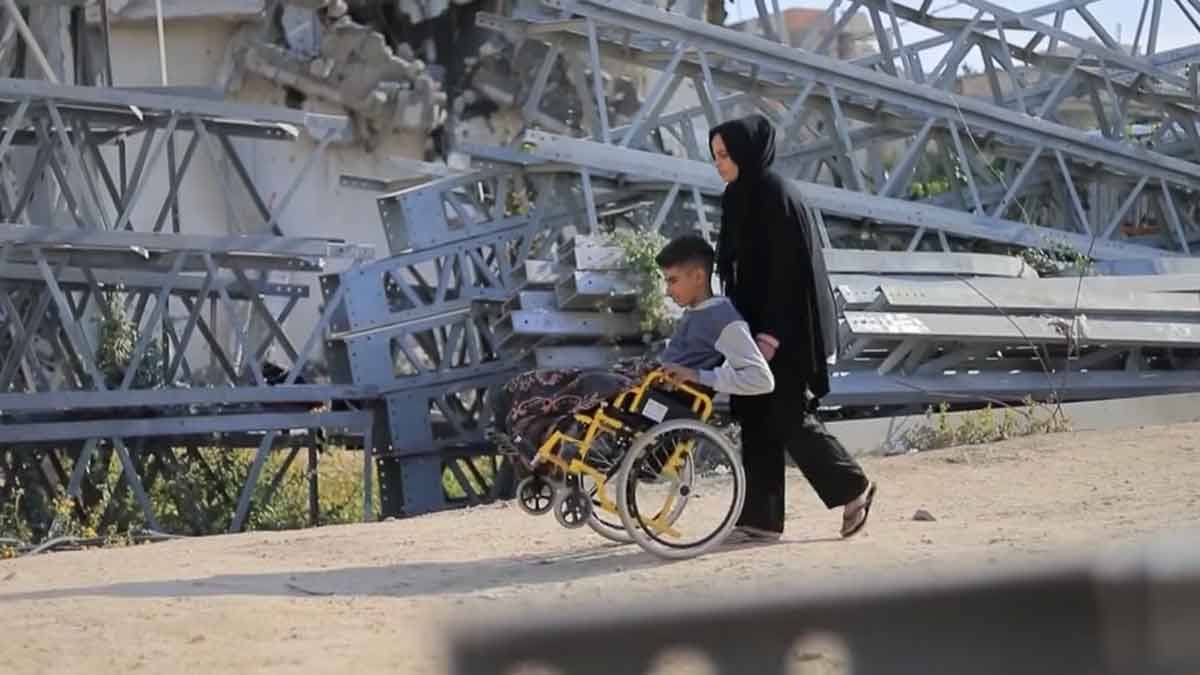
New figures released by the Ministry of Health in the Gaza Strip reveal the scale of lasting humanitarian harm caused by Israeli war on the enclave. The ministry announced that six thousand cases of limb amputation have been recorded over two years of the genocide carried out by Israeli occupation forces since seven October twenty twenty three.
Marking the International Day of Persons with Disabilities, the ministry stated that these cases “require urgent and long-term rehabilitation programmes” amid a severe shortage of resources and assistive devices.
It explained that a quarter of all amputees are children, meaning thousands of young boys and girls now face permanent disabilities at an early age. Under international law, children are entitled to heightened protection as a specially safeguarded group in armed conflicts.
The ministry stressed that thousands of the wounded are enduring “profound humanitarian suffering” that necessitates comprehensive psychological, social and rehabilitative support. It called on international organisations to act urgently to ensure that these individuals can access specialised services.
The widespread cases of amputation point to violations of several fundamental norms of international humanitarian law, particularly the principles of distinction and proportionality. Targeting densely populated civilian areas or deploying weapons with high destructive capacity without adequate precautions to protect civilians constitutes a clear breach of legal obligations binding on an occupying force.
Leaving thousands of amputees without appropriate rehabilitation or assistive equipment, obstructing the entry of medical supplies, or destroying healthcare facilities also violates the responsibilities of an occupying power to ensure access to necessary medical care and to refrain from impeding the work of medical and relief infrastructure.
The scale of permanent injury reinforces concerns about systematic patterns of harm that result in long-term disabilities. This raises legal questions regarding excessive use of force, deliberate or reckless targeting of health infrastructure, and the denial of victims’ rights to treatment and rehabilitation, all of which are guaranteed under the Geneva Conventions and binding on all parties to the conflict.
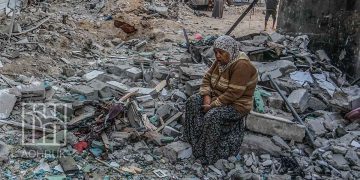
The suffering of thousands of amputees illustrates that the end of active hostilities does not mean an end to their consequences. The genocide has left physical, legal and social scars that will require long-term remediation. The right of the injured to care, rehabilitation and dignity is not merely a humanitarian option; it is a legal obligation that the international community must uphold, especially given the collapse of the health system inside the Strip.
The continued absence of these guarantees not only leaves the wounded trapped in ongoing pain, but also constitutes an extension of the violations themselves, particularly when disability is the direct result of disproportionate military operations or attacks directed at civilian areas.