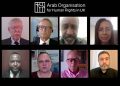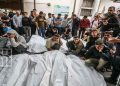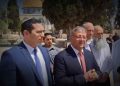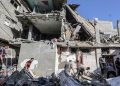



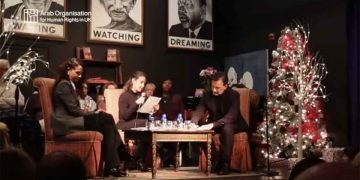

A coalition of U.S. human rights organisations—including BeMagazine.org, Egyptians Abroad for Democracy, the Gandhi Global Center for Peace, the Social Justice Committee of the Unitarian Universalist Church of Chattanooga, and Chattanooga Standing Out—organised a full-day programme on 10 December 2025 in Chattanooga, Tennessee, in collaboration with the Arab Organisation for Human Rights in the UK (AOHR UK). The event marked International Human Rights Day with a unified focus on accountability for Israel’s genocide in Gaza and the enabling role of U.S. political and military support.
The day opened with remarks from community partners and organisers, who underscored the purpose of the gathering: to strengthen solidarity networks, amplify resistance, and expand nonviolent action grounded in truth-telling and collective responsibility. Participants were encouraged to mobilise their voices, social platforms, and community engagement as part of a wider movement for justice.
Opening Session – Historical and Political Context
The first major event of the day was the opening lecture delivered by Dr. Fouad Moughrabi, Professor Emeritus of Political Science at the University of Tennessee at Chattanooga. Dr. Moughrabi offered a deeply rooted historical analysis of the Israeli–Palestinian conflict, describing it as a settler-colonial project that has systematically displaced Palestinians for more than a century. Drawing on personal memories of being forced from his village, Ein Karem, in 1948, he illustrated the lived reality of ethnic cleansing and how Zionist ideology sought to create a polity without native Palestinians.
He referenced key scholars—including Rashid Khalidi, Ilan Pappé, and Edward Said—to emphasise the importance of understanding Palestine not only historically but as a global metaphor for oppression and resistance. Dr. Moughrabi argued that Gaza has exposed the moral failure of the global liberal order and the selectivity of Western human rights frameworks. He stressed that Palestinian resistance takes many forms—cultural, social, and political—and insisted that public pressure, international solidarity, and civic resistance remain crucial in confronting ongoing atrocities.
Youth Session – Emerging Voices in Nonviolent Action
The second session spotlighted a diverse group of young organisers and artists who are shaping new models of nonviolent resistance. Each speaker presented their work within broader struggles for justice, including Palestine, climate justice, racial equity, and student rights.
• Lauren Hurley, from Sunrise Movement Chattanooga, discussed the link between climate justice and human rights, explaining how environmental destruction and displacement—including in Gaza—are tied to systems of colonial violence. She highlighted local mutual aid efforts and emphasised that climate action cannot be separated from social justice.
• Alyssa Looney detailed her role in founding the UTC Civic Engagement organisation, describing student-led protests, battles against discriminatory educational policies, and efforts to protect DEI programmes on campus. She explained how students are confronting political repression, fighting for voter access, and organising a statewide protest in Nashville to challenge Tennessee’s laws targeting education and student rights.
• Saffron, a young artist and co-founder of ColorCraze, spoke about activism through art, political expression, and amplifying marginalised voices. She stressed that youth cannot “just live their lives” without fighting for equal rights. She highlighted global struggles, including Palestine and Sudan, and urged young people to speak out rather than remain silently “non-racist.”
• Krantzsy Boursiquot, a poet and community activist, reflected on the power of language and art as tools of resistance. Drawing on personal background and global injustice, he explained how art can drive social transformation and emphasised the idea that “existence is resistance.”
Panelists and moderators underscored how youth movements are confronting censorship, building community, and mobilising across social, political, and artistic spaces. The session affirmed that young people are central to advancing human rights, expanding solidarity networks, and sustaining nonviolent resistance.
Justice & Accountability Forum: Examining Impunity and U.S. Involvement
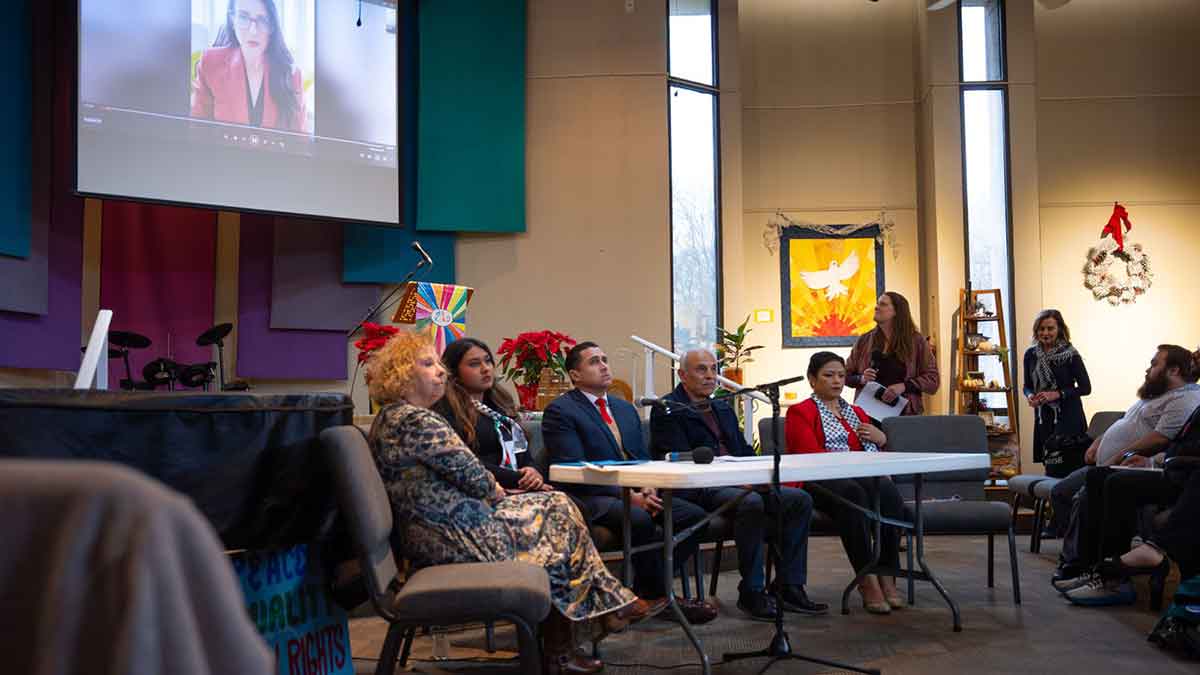
As for the third event of the day, it featured the Justice & Accountability Forum — the most consequential and wide-ranging session in the entire Human Rights Day programme. Organised by U.S. human rights groups in partnership with the Arab Organisation for Human Rights in the UK (AOHR UK), this forum brought together former diplomats, military analysts, humanitarian workers, medical witnesses, faith leaders, community organisers, and policy advocates to examine the entrenched system of impunity surrounding Israel’s actions in Gaza, the decisive role of U.S. support, and the global responsibility to pursue justice.
The forum opened with a recorded address from Hala Rharrit, former U.S. State Department Spokesperson, who resigned in 2023 after refusing to deliver official talking points that minimised Palestinian suffering. Her testimony offered a rare insider view of dissent within the U.S. foreign policy establishment, the suppression of field reporting, and the refusal to reassess policy despite escalating civilian massacres.
Anthony Aguilar, former officer with the Gaza Humanitarian Foundation, delivered a detailed eyewitness account from inside Gaza. He described how humanitarian aid was transformed into an extension of military strategy; the deliberate manufacture of famine; the targeting of civilians at aid-distribution sites; and the wider pattern of coercion, displacement, and devastation in violation of international humanitarian and genocide conventions. Aguilar’s intervention also connected Gaza to broader geopolitical structures and underscored the legal and moral responsibilities of humanitarian personnel. He is preparing to travel to The Hague to submit testimony in ongoing international proceedings.
Former U.S. Army intelligence analyst Josephine Guilbeau expanded the discussion by outlining her journey from military service to public dissent. She exposed the machinery of political propaganda, the influence of AIPAC and military contractors, and the erosion of democratic oversight that enables U.S. complicity. Her experience speaking inside Congress—where elected officials openly dismissed documented evidence of war crimes—revealed the depth of institutional capture and the urgent need for structural change.
The panel also featured Bassam Issa, a prominent human rights advocate, who analysed the role of Western media in concealing atrocities and manufacturing false equivalence. He examined how selective coverage, the erasure of Palestinian voices, and the suppression of historical context create the conditions that allow genocide to unfold “in plain sight.”
Longtime peace activist Medea Benjamin, Co-Founder of CODEPINK, contextualised the crisis within decades of U.S. arms transfers, lobbying networks, and shifting public opinion. She highlighted key legislative efforts, the growing refusal of some elected officials to accept AIPAC funding, and the consequences of continued military financing for both Palestinians and U.S. democratic accountability.
From the faith sector, Rabbi Lynn Gottlieb offered a profound ethical and spiritual critique of genocide, settler colonialism, and the theology underpinning Zionist violence. Drawing on decades of interfaith organising, she mapped new mobilisations across religious communities and stressed the necessity of naming genocide clearly and resisting erasure.
From the community activism sector, Judith Pedersen-Benn delivered a moral indictment of the ongoing genocide in Gaza, grounding her perspective in the principle that collective suffering binds humanity together. Drawing on her long-standing commitment to nonviolent resistance, she framed Gaza as a decisive test of global conscience, where silence becomes complicity and action a moral duty. She underscored that confronting genocide requires clarity, courage, and an unwavering refusal to separate ourselves from the fate of the oppressed.
From the community leadership sector, Amna Shah delivered an urgent call for moral clarity and civic responsibility in the face of the ongoing genocide in Gaza. Speaking with striking honesty, she framed silence as complicity and insisted that dignity, safety, and justice for Palestinians must become a core commitment for every community. Drawing on her work in women’s empowerment, refugee support, and civic engagement, she argued that marginalized groups must build political power, challenge discriminatory policies, and confront systems that treat some lives as expendable. Amna highlighted the daily indignities faced in Gaza — from starvation to the denial of basic necessities — as evidence of a collapsing moral order that demands immediate action. Her message was clear: this is the moment to speak, to organize, and to stand on the right side of history.
From the civic engagement sector, Jannat Saeed underscored that genocide in Gaza is rooted in political systems that decide whose lives deserve protection. She argued that impunity begins with policies that dehumanize and silence communities, and that accountability must start locally by challenging unjust laws and building real civic power. Her message was clear: Gaza is a reminder that silence enables atrocity, and meaningful change requires informed, collective action.
The session concluded with a recorded testimony from Dr. Mark Perlmutter, an American orthopedic surgeon who recently completed medical missions in Gaza. His detailed account of mass casualties, targeted attacks on children, systematic deprivation of medical supplies, and the destruction of healthcare infrastructure provided one of the day’s most devastating insights into the humanitarian catastrophe.
Taken together, these contributions formed a comprehensive and uncompromising examination of genocide, complicity, and resistance. The Justice & Accountability Forum underscored that confronting impunity requires public truth-telling, coordinated civil society action, legislative intervention, and an unwavering commitment to protecting human life—both in Gaza and within the political systems that enable its destruction.