














In a serious breach of international law, Israeli settlers set fire early on Monday to a mosque located between the towns of Surra and Tell, west of Nablus, in a renewed attack targeting places of worship in the occupied West Bank, amid a marked escalation in violations against Islamic holy sites.
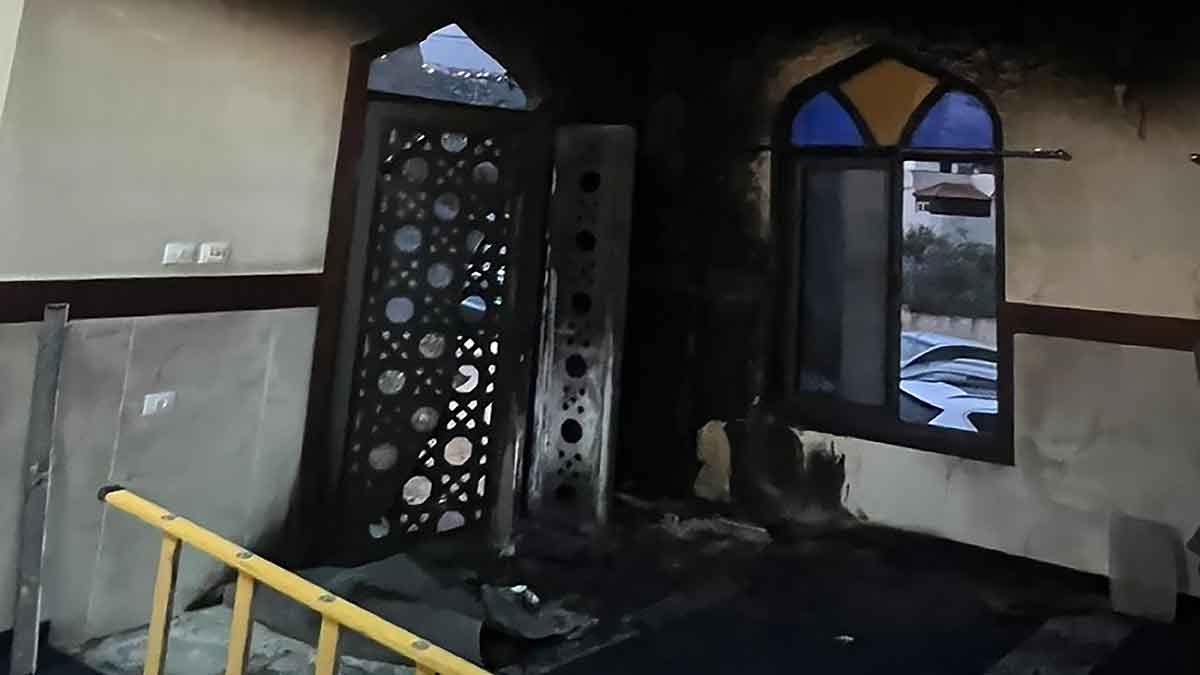
Local sources reported that settlers ignited a fire at the Abu Bakr Al-Siddiq Mosque by pouring flammable materials at its entrance, causing material damage to parts of the building. They also sprayed racist, anti-Arab and anti-Muslim graffiti on its walls, in an act carrying clear incitement and targeting a site dedicated to worship.
The Palestinian Ministry of Endowments and Religious Affairs condemned the attack, stating that it comes within the context of increasing assaults on religious sites and property.
The ministry noted that in 2025 alone, 45 mosques across the West Bank were subjected to attacks, including arson, closures, and the prevention of the call to prayer, stressing that such violations undermine freedom of worship and target the religious and social fabric.
Attacks on places of worship constitute a clear violation of international humanitarian law, particularly the Fourth Geneva Convention, which obliges an occupying power to protect civilians and their property, and to ensure respect for religious sites. These rules prohibit any targeting of civilian objects and require effective measures to prevent violence and hold perpetrators accountable.
International human rights instruments, foremost among them the International Covenant on Civil and Political Rights, guarantee the right to freedom of thought, conscience, and religion, including the freedom to practise worship without interference or intimidation. Targeting mosques or any religious sites represents a direct violation of this right, as well as discrimination on religious grounds prohibited under international law.
Furthermore, international conventions on the protection of cultural property during armed conflict prohibit attacks on religious and cultural sites, recognising them as part of humanity’s shared heritage. The burning of a mosque and the defacement of its walls with racist slogans constitute an assault on the religious and cultural identity of the protected population and a breach of clear legal obligations to safeguard holy sites.
The recurrence of such attacks, in the absence of effective deterrent measures, reflects a failure to uphold the duty to ensure public order and protect civilians, reinforcing a climate of impunity and raising concerns over further escalation, at a time when international humanitarian and human rights law require special protection for places of worship under all circumstances.