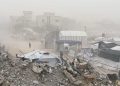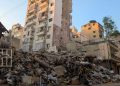


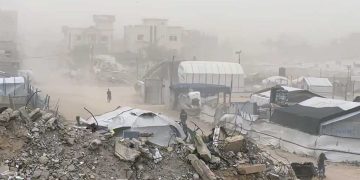







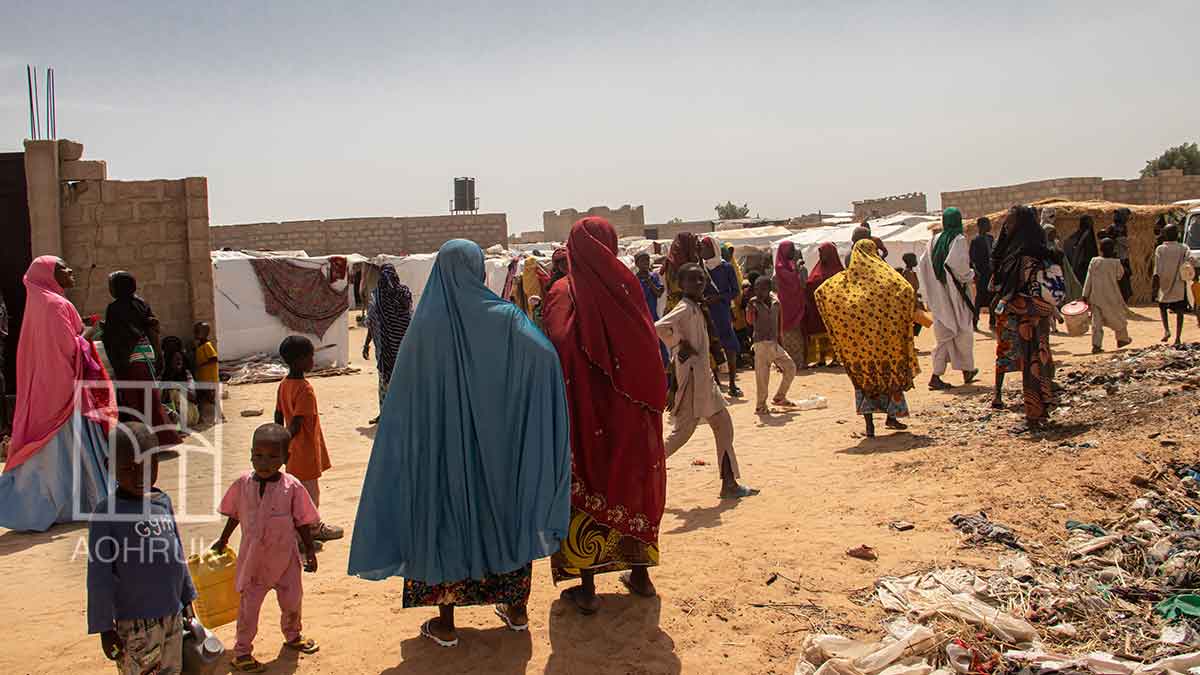
Alarming signs of a deteriorating humanitarian situation are emerging in the city of Babnousa, in Sudan’s West Kordofan State, as fighting draws dangerously close to stranded civilians and basic protections guaranteed under international law weaken further, particularly for women and children.
In this context, the Sudan Doctors Network (an independent grassroots body) expressed its “deep concern over the unknown fate of dozens of children and women” inside Babnousa following intense clashes between the army and the Rapid Support Forces.
In a statement, the network said it was “monitoring with concern the developments on the ground” after large numbers of women and children had earlier sought refuge in the headquarters of the Twenty Second Infantry Division, following the RSF’s takeover of the city.
The network added that the situation had become even more perilous after videos began circulating showing RSF elements filming women and children inside the division’s buildings, where families appeared to be in a “critical humanitarian condition”, heightening fears that they may face violence or forced detention.
The situation in Babnousa reflects the wider human rights crisis engulfing Sudan since the outbreak of war in April twenty twenty three. As fighting intensifies in populated areas, risks of grave violations increase, including the targeting of civilians, obstruction of humanitarian access, and the use of siege tactics as a method of warfare, practices prohibited under the core rules of international humanitarian law.
Warring parties are obligated to take all necessary precautions to shield civilians from the dangers of military operations, and to ensure freedom of movement for those seeking safe passage or urgent relief. Forced detention or treating civilians as potential adversaries constitutes a violation of the principle of civilian protection, which remains in force throughout all stages of conflict.
The war, now in its second year, has left tens of thousands dead and displaced nearly thirteen million people in one of the most severe humanitarian catastrophes of the modern era. Cities such as Babnousa stand as stark reminders of the devastating price civilians pay when politics and gunfire intersect.