

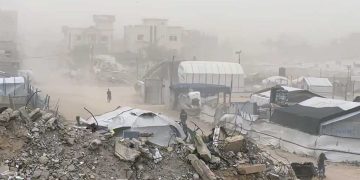



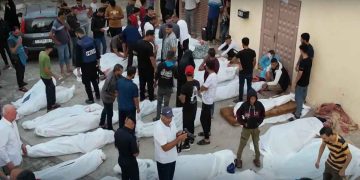







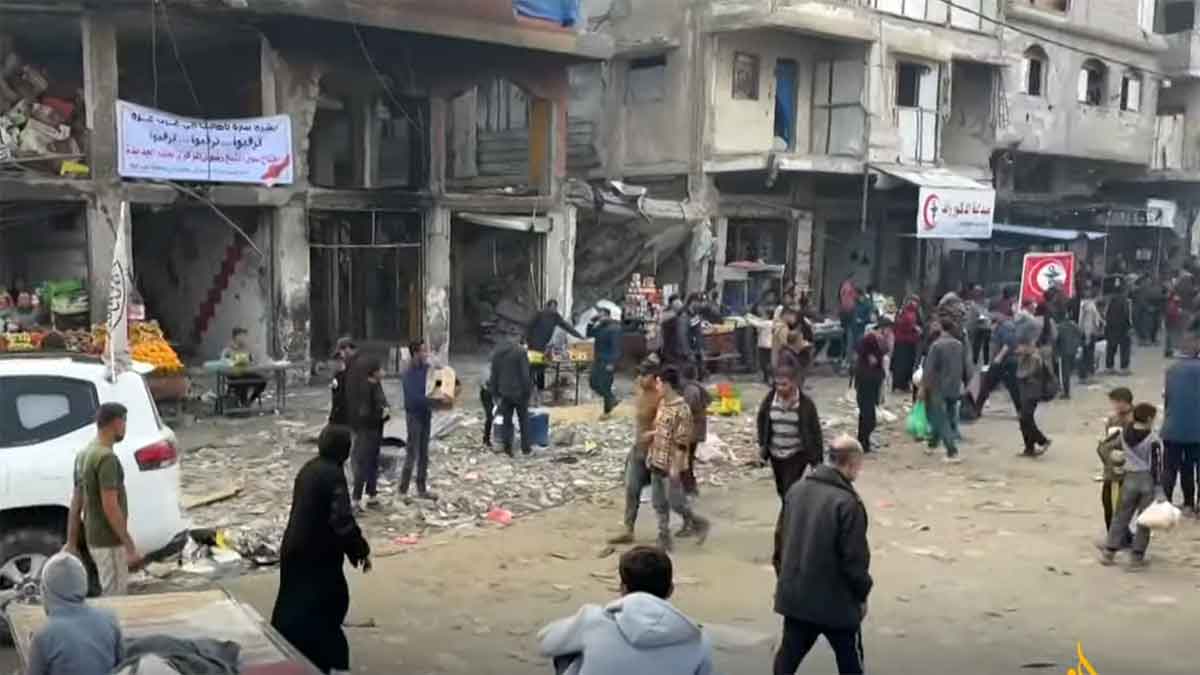
Various areas in the Gaza Strip are witnessing a sharp increase in Israeli attacks targeting civilians, further exacerbating the already dire humanitarian conditions.
In this context, a Palestinian man was killed on Monday morning by fire from an Israeli occupation army drone in the Al-Zaytoun neighbourhood, southeast of Gaza City, according to medical sources.
The victim has been identified as Mohammad Nasr Siyam, a young man targeted in a densely populated area, an incident that highlights the continued exposure of civilians to direct danger due to the use of military force in confined urban spaces.
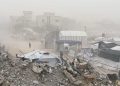
At the same time, the Israeli occupation army launched heavy artillery shelling on eastern areas of Rafah and Khan Younis, accompanied by intense gunfire from helicopters. Eyewitnesses reported plumes of smoke rising from several residential sites, triggering widespread panic among residents of border regions, especially amid limited access to safe shelters or appropriate accommodation centres.
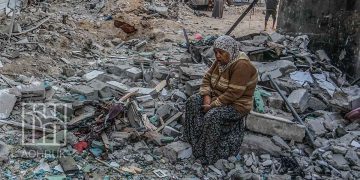
Since 7 October 2023, Israeli occupation’s genocidal war on the Gaza Strip has resulted in over 70,000 deaths and around 170,000 injuries—most of them women and children. The assault has also caused extensive destruction to infrastructure and vital facilities, worsening the humanitarian crisis and severely limiting the capacity of civil and medical institutions to perform their essential roles.
The direct targeting of individuals within civilian areas—including the use of drones in crowded neighbourhoods, falls within practices restricted under international humanitarian law, which obliges warring parties to distinguish clearly between civilians and combatants, and prohibits strikes likely to cause disproportionate civilian harm relative to any potential military objective.
Given Gaza’s densely packed neighbourhoods and compact architecture, any use of force in residential zones greatly increases the risk to civilians.
International law also imposes a clear obligation to protect civilians and ensure their lives and properties are not put at unnecessary risk. Field evidence shows that movement restrictions, area closures, and repeated shelling near homes undermine fundamental rights such as the right to life, safety, and adequate housing. These practices further obstruct civil and medical services, compounding the long-term humanitarian impact on the local community.