












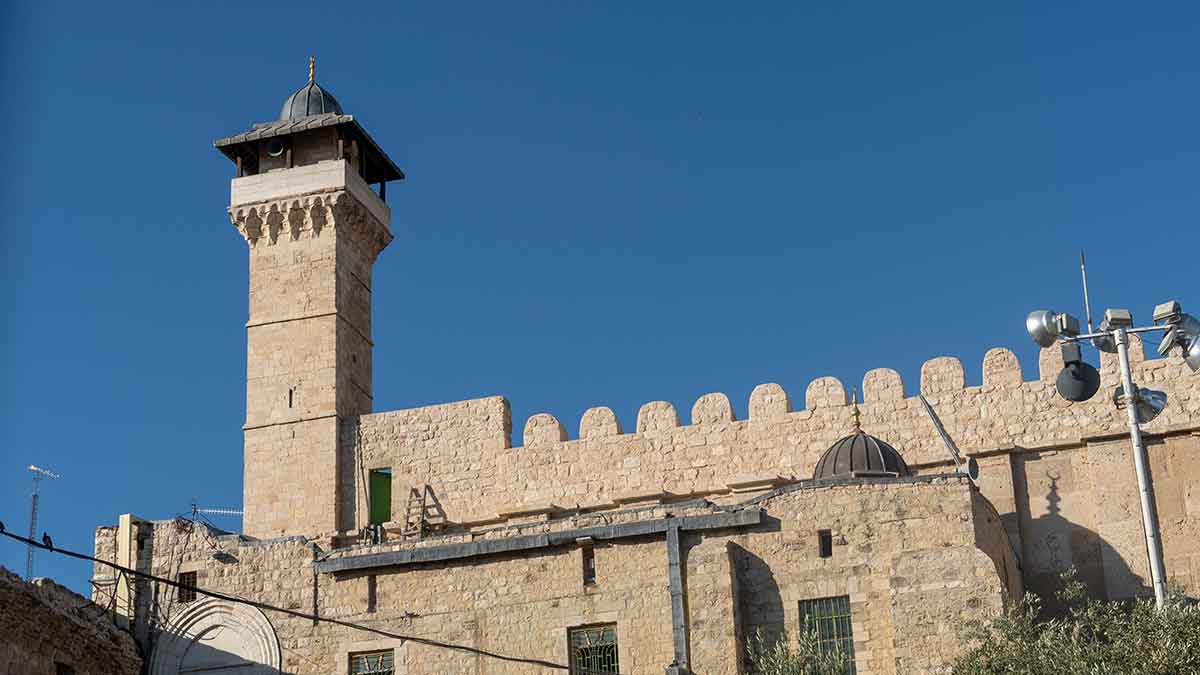
Israeli occupation forces on Sunday notified Moataz Abu Sneineh, Director of the Ibrahimi Mosque, and Himam Abu Markhiya, Head of its custodians, of a decision barring them from the mosque for 15 days, prohibiting their presence or prayer within its courtyards and halls.
Abu Sneineh stated that occupation forces summoned him to the Telam Police Station, where he was handed an official expulsion order, alongside a similar decision issued against Abu Markhiya. The move directly affects the administration of the Ibrahimi Mosque and the management of its religious affairs.
The decision comes as part of an ongoing policy aimed at emptying the Ibrahimi Mosque and Hebron’s Old City of those responsible for their religious and administrative affairs, through coercive administrative and security measures. These include repeated expulsions, restrictions on access, and direct interference in the management of the religious site.
The expulsion of officials responsible for the administration of a religious site constitutes a clear violation of freedom of religion and belief, including the right to practise religious rituals and manage holy sites without arbitrary interference. Such measures also contravene the prohibition on imposing collective penalties or restrictive measures outside the framework of due judicial process and fair trial guarantees.
Under international humanitarian law, the occupying power is obliged to protect religious sites, preserve the status quo, and refrain from taking measures that alter their character, administration, or the identity of those entrusted with their care. It also bears responsibility for respecting the civil and religious rights of the population under occupation, and for imposing restrictions only in narrowly defined exceptional circumstances, in line with the principles of necessity and proportionality.
The repeated use of expulsion orders against religious and administrative figures at the Ibrahimi Mosque reflects a systematic pattern aimed at weakening Palestinian administration of the site, undermining its effective presence, and imposing permanent facts by force at one of the most significant religious and historical landmarks in the occupied territory.
Such measures seek to establish a lasting reality based on coercive control and the removal of those responsible for the site, in violation of peremptory rules of international law, which prohibit the occupying power from making fundamental changes to the religious and cultural structure of territories under its control.