















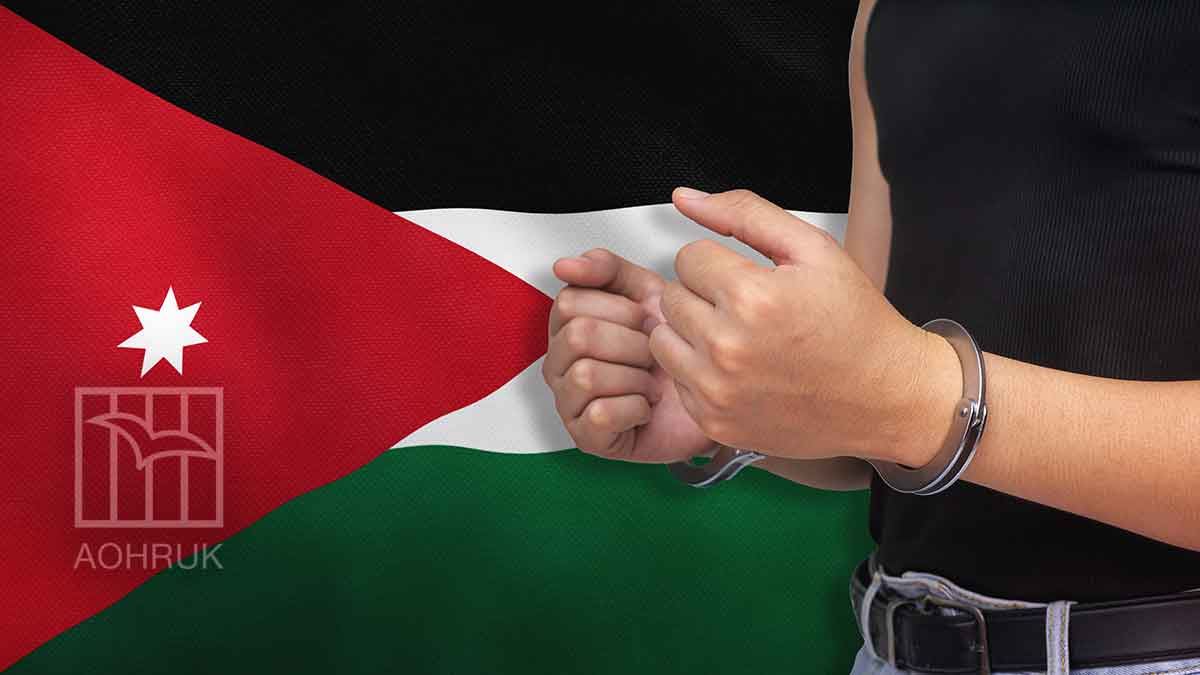
The Jordanian authorities continue to target activists who express solidarity with the Palestinian people, particularly during the Israeli aggression on the Gaza Strip, by using the judiciary to issue sentences based on intent or planning, without any actual actions taking place.
In the latest development, the Jordanian State Security Court today sentenced four individuals to eight years in prison, including former detainee Wael Arafat and his brother Ramzi, along with Laith Mahmoud al-Jamal and Ammar Ibrahim al-Mousa.
The verdict came after they were convicted of “endangering state security and disturbing relations with foreign countries,” based on their alleged intent to cross the border during the assault on Gaza and plan an operation against the occupation in the West Bank after securing weapons.
This ruling raises serious legal and human rights concerns, as it relies on intention rather than any actual deed, thereby expanding the scope of criminalisation and threatening fundamental freedoms.
From a legal standpoint, the offence of “disturbing relations with foreign countries” requires clear and defined limits; otherwise, it becomes a political tool to punish any activity expressing solidarity or opinion towards other peoples—a practice at odds with constitutionally and internationally protected freedoms of expression and thought.
The conditions of detention and investigation in such cases also prompt further questions, especially in light of allegations of torture and denial of basic rights in Jordan’s security prisons, including the right to a fair trial, access to legal representation, and protection from coercion or forced confessions.
This verdict reflects an ongoing policy of tightening the grip on civil and political activism and targeting individuals for their humanitarian stances, rather than focusing on protecting national security within fair and transparent legal frameworks.
The judgment against the four activists demands immediate reconsideration, as it constitutes a violation of fundamental human rights and a threat to the freedom of expression and solidarity with humanitarian causes. It also underscores the urgent need to end the misuse of “state security” laws as tools for criminalising political opinion and civic engagement, and to ensure fair trials that uphold legal, constitutional, and international standards—balancing national security with individual rights.