













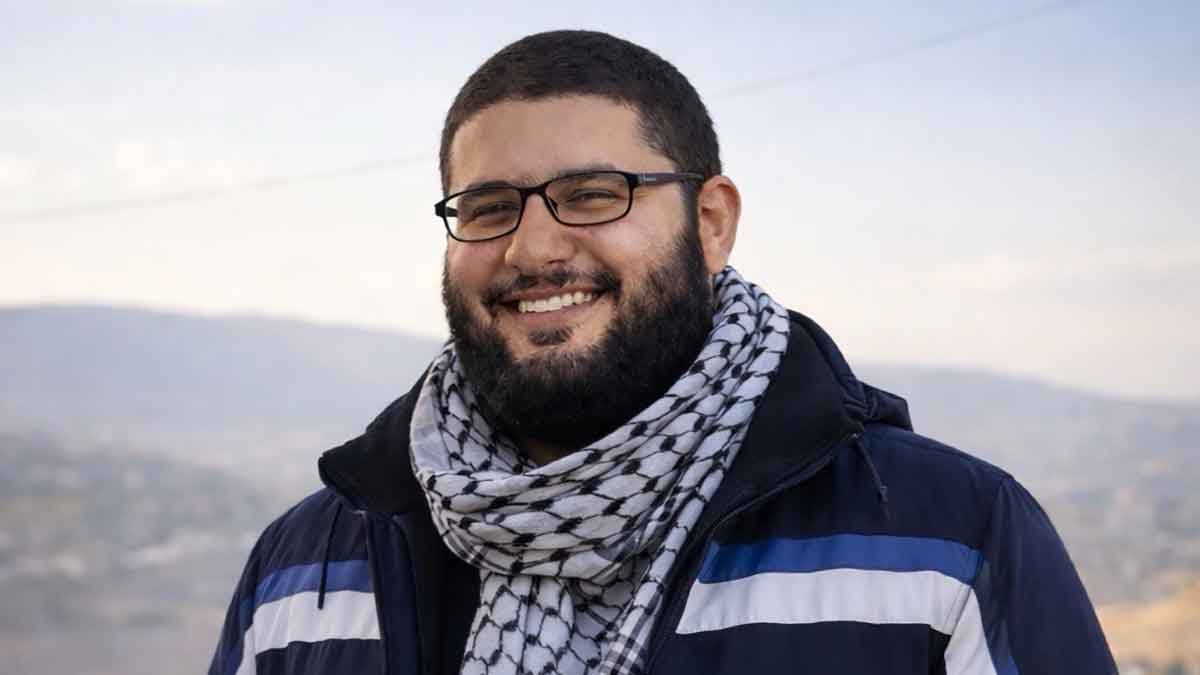
Jordanian authorities arrested Kamal Jihad al-Ja’bari, a Jerusalem affairs specialist and member of the youth sector of the Islamic Action Front party, in front of his home in the Shmeisani area of Amman. He was taken to an unknown location without a warrant or any indication of who carried out the arrest.
This arrest is the latest in a series of crackdowns on political and party activists in Jordan, a clear violation of public freedoms and citizens’ right to express their opinions, including support for humanitarian and political causes, such as the situation in the Gaza Strip.
Al-Ja’bari faces a direct threat to his life, as he has suffered from type 1 diabetes since childhood, with recent complications including high blood pressure and a detached retina and cataracts in his remaining eye. He also requires daily doses of medication and insulin.
Al-Ja’bari’s arrest without providing him with necessary medical care poses a serious risk to his health and undermines his right to life and health, as enshrined in international conventions.
For her part, al-Ja’bari’s wife confirmed in a post on his personal page that the arresting force refused to accept his medication and declined to provide her with information about his whereabouts. This reflects a clear disregard for the fundamental rights of detainees, especially those suffering from chronic and life-threatening illnesses.
The practice of arresting detainees without a warrant and disregarding the right to healthcare constitutes a blatant violation of the Jordanian Constitution, which guarantees freedom of expression and the right to public freedoms. It also violates international human rights standards, including the Universal Declaration of Human Rights, which guarantees the right to liberty, security of person, and freedom of expression, and the International Covenant on Civil and Political Rights, which prohibits arbitrary arrest and emphasizes the necessity of providing medical protection for detainees.
The continued political and partisan arrests, particularly those targeting activists associated with Palestinian and Jerusalem issues, reflect a policy of repression aimed at silencing dissenting voices and preventing the expression of internationally sensitive issues. This places Jordan under the scrutiny of the international human rights community and threatens its reputation for respecting fundamental freedoms.
The situation also points to a gap in judicial oversight mechanisms for security agencies, which opens the door to further violations and raises questions about guarantees for the protection of the lives and health of detainees in the country, especially given the deteriorating health conditions of some, as is the case with al-Ja’bari.
The continued policy of arbitrary arrests threatens public freedoms and places Jordan under direct human rights and moral responsibility. It necessitates holding security agencies accountable and ensuring their adherence to local and international laws that protect citizens’ rights to life, health, and freedom of expression.