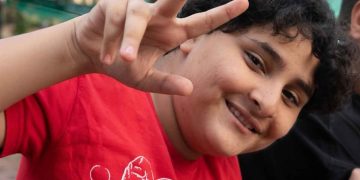
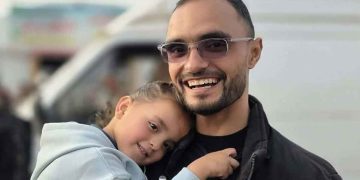
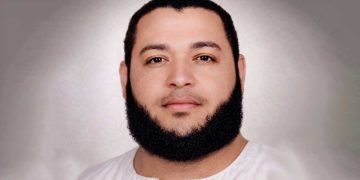









The Court of Appeal in Jordan has decided to increase the prison sentence of child detainee Abdulrahman Khaled al-Juhani to two years, after a lower court had previously sentenced him to one year, according to his father’s announcement on Facebook.
This ruling comes despite the same court having reduced the original sentence against three minors, including Abdulrahman, in November 2025 from three years to one year, only to now increase the penalty once again.
On 18 November 2025, a Jordanian court convicted the three minors, among them Abdulrahman, the son of opposition activist Khaled al-Juhani, on a list of extremely serious charges, including forming an organisation with the intent to carry out terrorist acts, possession of explosive materials, manufacturing explosives, and promoting terrorist groups. These charges are among the most severe in Jordanian penal law.
Despite their seriousness, the case file lacks clear factual evidence or tangible proof that would justify such accusations, especially against minors. The use of broad terrorism-related charges without substantiation erodes justice and transforms the judiciary into a tool of political deterrence rather than a vehicle for fairness.
Trying children in state security cases, according to established legal principles, requires extraordinary safeguards that prioritise protection and rehabilitation over punishment. Yet the decision to increase the sentence against a minor, rather than exploring legal and humanitarian alternatives, undermines the very philosophy of juvenile justice and violates the principle of proportionality between the act and the punishment.
The case has taken on a clear political dimension due to the relationship between one of the sentenced minors and a known opposition figure, raising concerns of retaliatory justice and casting doubt on the independence and impartiality of the judiciary. Linking criminal proceedings to family ties or political stances flagrantly violates the principle of individual criminal responsibility, a cornerstone of justice.
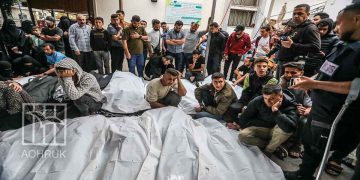
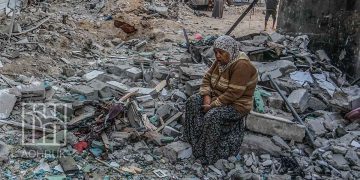
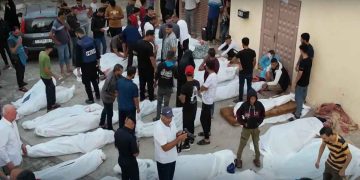
This case is part of a broader pattern of prosecutions targeting young people and minors in recent months, many of whom have been charged with similar offences merely for expressing solidarity with Gaza amid the ongoing war. It reflects a troubling trend of using loosely defined anti-terror laws to criminalise political expression and humanitarian solidarity, in direct conflict with constitutionally protected freedoms.
The vague definitions of terms like “promotion,” “sympathy,” and “support” have opened the door to expansive security interpretations, turning political or moral stances into criminal acts and placing minors in direct confrontation with a punitive legal system that ignores their age and vulnerability.
The continued detention of minors for over seven and a half months, and the intensification of their sentences despite serious doubts about the case’s integrity, raises profound questions about the judiciary’s adherence to international standards for juvenile justice, which stipulate that detention must be a last resort and for the shortest possible time.