














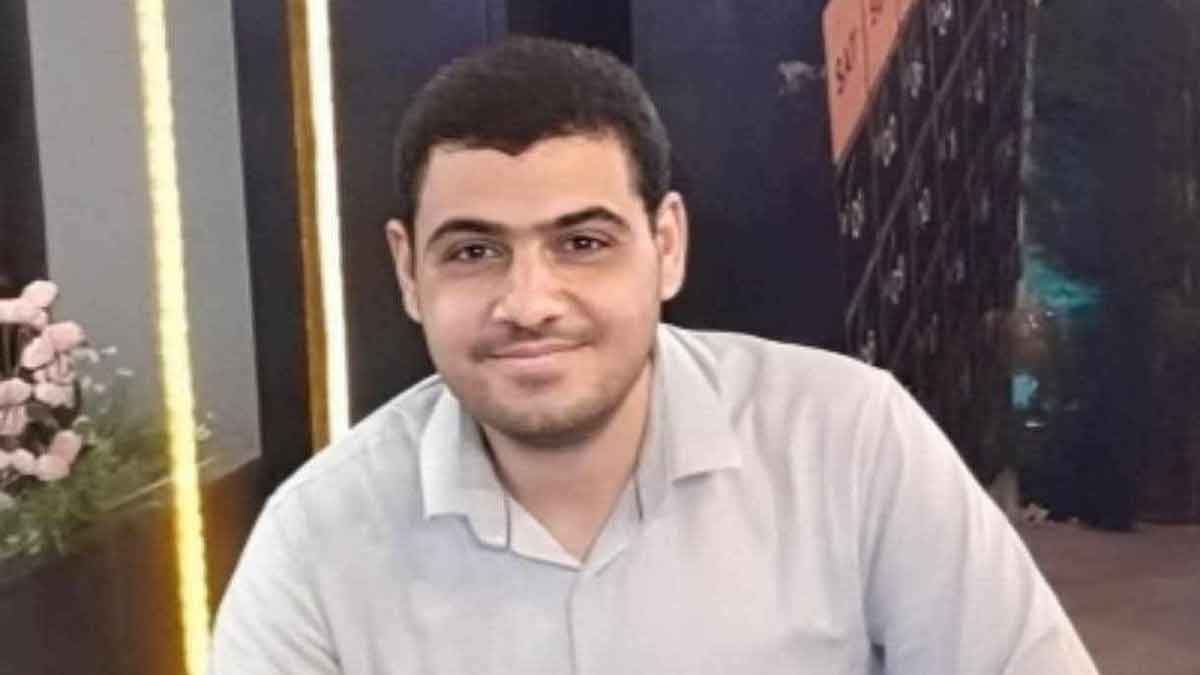
The Jordanian detainee, engineer Abdullah Hisham, sentenced to 15 years in prison in the case publicly known as the “Rocket Case” linked to support for the Palestinian resistance, has entered his third consecutive day of an open-ended hunger strike. He is protesting what he describes as inhumane treatment and dire detention conditions inside Al-Balqa prison in the city of Salt.
According to his lawyer, Abdel Qader Al-Khatib, Hisham resorted to the strike after exhausting all legal avenues to improve his conditions, despite suffering from chronic illnesses, including asthma, hyperthyroidism, and severe disc pain in the neck.
Al-Khatib explained that Hisham was transferred between several prisons—Marka, Al-Muwaqqar, and finally Al-Balqa—where he was designated a “special and dangerous prisoner,” a classification the family says is disproportionate to the nature of his case and medical condition.
The family said the hunger strike was neither hasty nor symbolic, but the result of prolonged suffering that has deeply affected his dignity and humanity. They affirmed that Abdullah considers himself a political prisoner, not a criminal, and that his treatment fails to acknowledge this distinction.
He was moved between three prisons in less than a year after the investigation phase concluded, compounding the hardship for his family, particularly his children and elderly parents, due to long distances and difficulty attending regular visits.
The family also reported being denied private visitation rights, which allow a brief in-person meeting without barriers. The last such visit occurred on 2 October 2025, over three months ago.
Furthermore, they were not allowed to deliver suitable winter clothing, despite the prison’s severe cold conditions. He is also reportedly deprived of daily access to sunlight and held in an unhealthy environment where skin diseases, including scabies, are widespread.
They noted that placing him in a ward with inmates serving sentences for various criminal offences, despite his clean criminal record, is degrading and psychologically distressing.
These developments raise serious legal and human rights concerns regarding the treatment of prisoners, particularly those convicted in politically or security-motivated cases. International standards for prison management require humane treatment, adequate healthcare, regular family contact, and protection from arbitrary or degrading measures.
Frequent prison transfers, denial of basic rights such as private visits or outdoor time, and refusal to accept necessary clothing may shift from administrative procedures to forms of psychological pressure if not legally justified or independently monitored.
In this context, the hunger strike takes on grave significance: it is among the most serious forms of protest within prisons and signals a deep sense of hopelessness and deprivation of any other means of redress.
In October 2025, the State Security Court sentenced Abdullah Hisham and his colleague Muath Ghanem to 15 years of temporary hard labour. A third defendant, Mohsen Ghanem, received a 7.5-year sentence in the same case, dubbed by the media as the “Rocket Manufacturing Case” linked to resistance support, which was first revealed in April 2024.
Other defendants were also convicted on charges of recruitment, while some were acquitted in the so-called “Drone Cell” case months after their confessions were broadcast on national television.
As Hisham’s hunger strike continues, concern is mounting for his health. His family and legal team are calling for an end to what they describe as punitive, unofficial measures and demand his treatment be brought in line with basic human rights and legal standards for detainees.