

















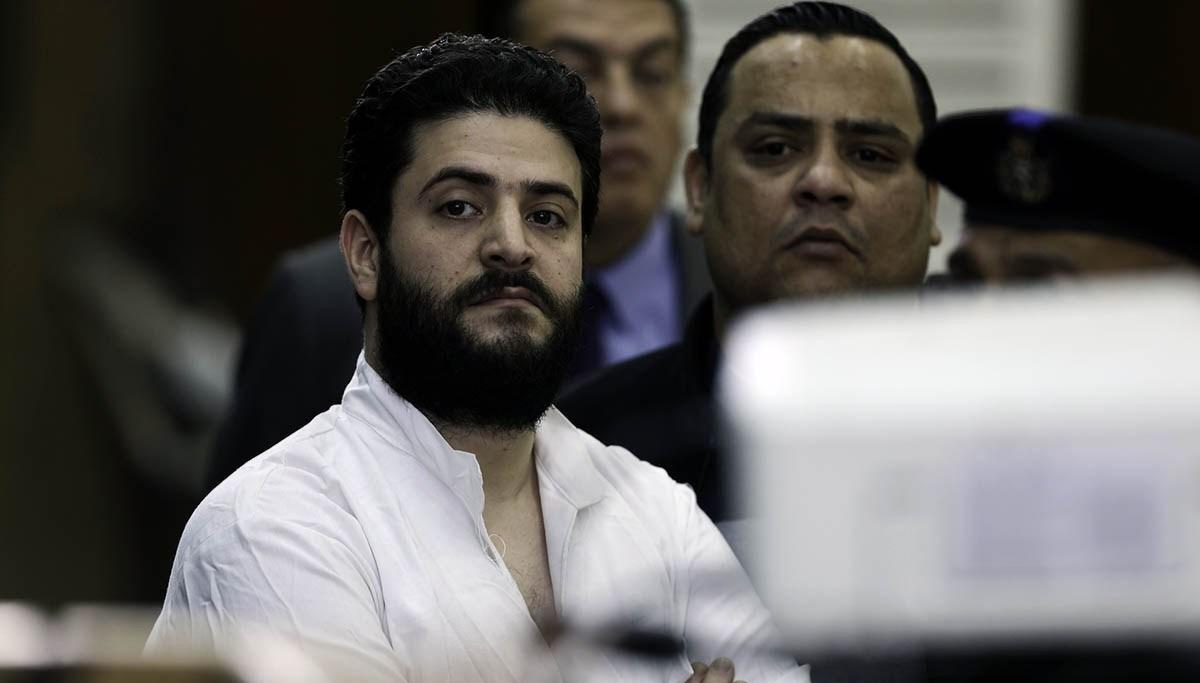
Lawyer Osama Morsi, son of Egypt’s late elected president Mohamed Morsi, has now spent a full nine years in Egyptian prisons. He has endured most of this time in near-total isolation, continually denied his most basic rights.
Although he is serving a 10-year sentence on charges of “inciting violence,” Egypt’s Supreme State Security Prosecution referred him, along with fellow lawyer Osama Bayoumi and more than 70 others including women, to a new criminal trial in March 2025 in Case No. 1096 of 2022.
This case appears to be a continuation of the Egyptian regime’s systematic use of “case recycling,” a tactic used to keep detainees imprisoned by recycling the same accusations, even against individuals kept in complete isolation—rendering such charges legally baseless.
Before his arrest in December 2016, Osama worked as a lawyer in courts and prosecution offices and was a member of his father’s legal defense team. But everything changed when he was taken from his home in Zagazig and transferred to the notorious maximum-security Scorpion Prison, and later to Badr Prison. He was held under a regime of complete isolation and denied visits. His family was only allowed to see him once, in late 2017, and even then, only through a glass barrier.
Osama was only allowed out of solitary confinement on two deeply sorrowful occasions: first in June 2019 to bury his father, and again in September of the same year to bury his younger brother Abdullah. The rest of his years have been marked by a continuous denial of visitation, medical care, Friday prayers, and even the academic books he needed to pursue his postgraduate studies.
In a session related to the Rabaa Dispersal Case, Osama stated he was held in total isolation, barred from speaking to anyone, and deprived of any medical attention.
His case reflects deep structural flaws within Egypt’s judicial system, especially when it comes to political detainees. Re-accusing someone already serving time, cutting them off from their family, and holding them in indefinite solitary confinement turns prisons into tools of political retaliation, rather than institutions of justice. These practices clearly amount to cruel and inhuman treatment, particularly when isolation becomes a permanent state rather than a temporary measure.
Osama Morsi’s ordeal is emblematic of a broader system in which the recycling of charges is used to prolong punishment indefinitely, absent any legal justification.
While officials speak of political reforms, Osama’s case shows that judicial repression remains deeply entrenched. The treatment of political prisoners in Egypt continues to be governed by a logic that prioritizes long-term silencing over any respect for legal or human rights standards.