

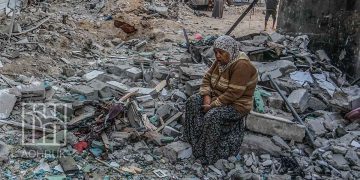






Sudan is confronting one of the gravest humanitarian catastrophes of the modern era, as a brutal war, now entering its third year, continues to devastate the country, turning it into an epicentre of mass displacement and widespread violations of fundamental rights.
In this context, the International Organization for Migration (IOM) has confirmed that Sudan is now experiencing the largest displacement crisis in the world, as a result of the ongoing conflict between the Sudanese Armed Forces and the Rapid Support Forces since April 2023.
According to the organisation, nearly 13 million people have been forced to flee their homes, a stark illustration of the collapse of civilian protection systems and a reality that has left millions of Sudanese outside any meaningful framework of safety or stability.
In a statement posted on the platform X, the IOM stressed that the crisis spares no one from mothers fleeing bombardment with their newborns, to students scattered far from their families. The scale of displacement exposes a profound social fragmentation wrought by the war.
The conflict, which erupted against the backdrop of a power struggle, has produced an exceptionally harsh humanitarian and legal reality. Forced displacement on this scale constitutes a blatant violation of the right to adequate housing, undermines the fundamental human right to stability and a dignified life, and places the state, under international law, before responsibilities it is no longer capable of fulfilling.
In recent weeks, Sudan’s three Kordofan states, North, West, and South, have witnessed intense fighting, triggering new waves of displacement affecting tens of thousands of civilians, amid the absence of safe corridors or any genuine guarantees for civilian protection.
The country’s military fragmentation continues to dominate the national landscape. The Rapid Support Forces control most of the five Darfur states in the west, with the exception of parts of North Darfur, while the Sudanese army holds the majority of other states, including the capital, Khartoum, now itself transformed into a battleground marked by violence and abuses.
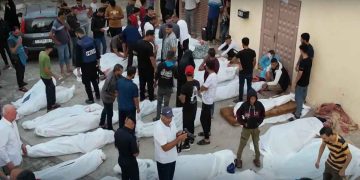
What is unfolding in Sudan cannot be separated from a profound failure to protect civilians during armed conflict, a cornerstone principle of international humanitarian law. Widespread killing, forced displacement, and the denial of food, water, and healthcare are all indicators of an erosion of the right to life and a clear breach of the obligations owed by all parties to civilians. The continuation of the war without accountability only entrenches a culture of impunity, threatening to turn humanitarian suffering into a permanent condition rather than a temporary emergency.
As the conflict enters its third year, the humanitarian crisis continues to deepen at an alarming pace, in the absence of any clear political horizon and amid ongoing violations that directly target civilians. Displacement in Sudan is no longer merely a by-product of war; it has become the defining symbol of a comprehensive collapse of the rights framework, one that endangers the country’s present and future, and places the international community before a moral and legal test that can no longer be postponed.