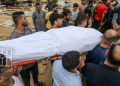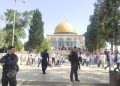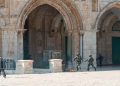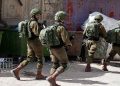






Occupied Palestinian territories witnessed, on Friday morning, unusually strict and unprecedented measures affecting the observance of Eid al-Fitr prayers, as the occupation authorities imposed sweeping restrictions on freedom of worship. These included limiting access to the Ibrahimi Mosque, preventing the holding of prayers at Al-Aqsa Mosque, and storming a mosque in the town of Ajja, south of Jenin.
In the city of Hebron, Eid prayers at the Ibrahimi Mosque were limited to around eighty worshippers only, after the Israeli occupation forces closed most of the mosque’s gates and imposed strict inspection procedures at the sole remaining entrance. This restriction is an extension of ongoing policies since the mosque was divided in nineteen ninety four following a bloody massacre, which resulted in the imposition of a coercive spatial and temporal arrangement limiting Muslim access to one of their most important holy sites.
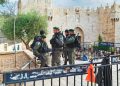
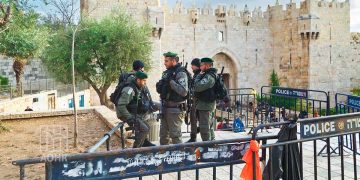
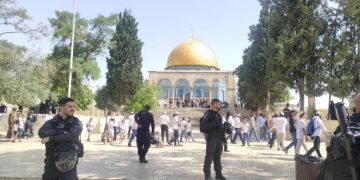
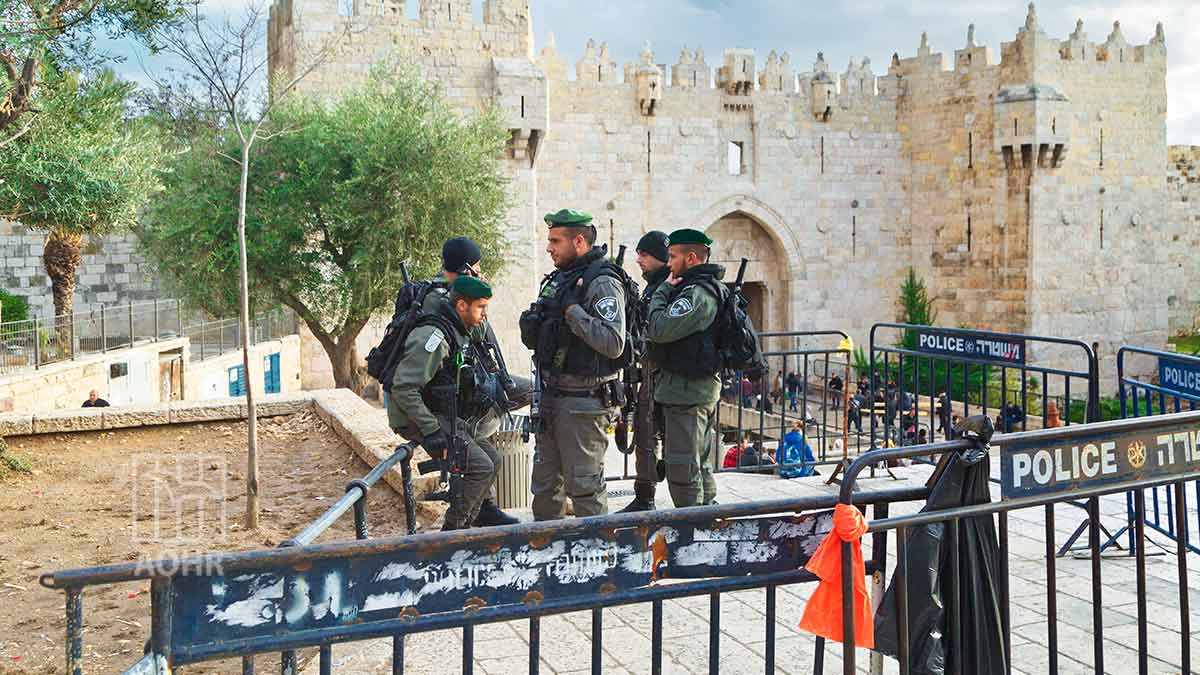
In occupied Jerusalem, for the first time since nineteen sixty seven, the Israeli occupation forces prevented the holding of Eid al-Fitr prayers at Al-Aqsa Mosque. Police forces were heavily deployed throughout the Old City and erected barriers to prevent worshippers from reaching the mosque. Tear gas was also used to disperse gatherings attempting to perform prayers in the vicinity of Al-Aqsa, and at least one Palestinian was arrested.
Prayer inside Al-Aqsa Mosque was limited to a small number of guards and Waqf staff, as the mosque has been fully closed for weeks under the pretext of security conditions. This resulted in thousands of worshippers being denied the ability to perform their religious rituals during one of the most important religious occasions, reflecting an escalation in restrictions on freedom of worship.
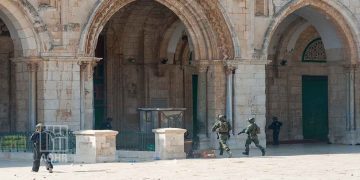
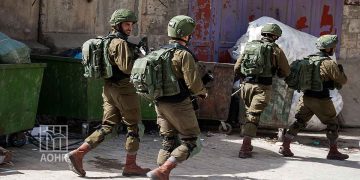
In a related development, the Isreali occupation forces raided a mosque in the town of Ajja, south of Jenin, during a military incursion that coincided with Eid prayers. They also carried out searches in several homes without making arrests, reflecting a recurring pattern of military interventions during sensitive religious periods.
These violations indicate a failure by the Isreali occupation authorities to comply with international humanitarian law, which obliges an occupying power to guarantee freedom of worship and to respect and protect religious sites. The broad collective restrictions on access to places of worship, particularly during religious holidays, are considered prohibited collective punishment measures that are not based on individual responsibility.
International conventions, including international human rights law, guarantee freedom of religion and the practice of worship without discrimination, including the right to access places of worship. These frameworks also prohibit arbitrary or disproportionate measures that obstruct this right, particularly when they target specific population groups.
These violations point to an escalating trend towards imposing a new reality that restricts Islamic religious presence at holy sites, whether through controlling access, full closures, or military incursions, raising serious concerns about the erosion of the historical and legal status quo at these locations.
These measures come amid rising regional tensions due to the American Israeli war on Iran. However, this does not absolve the occupying power of its legal obligations, which remain in force, including the duty to guarantee the fundamental rights of the population under its control, including the right to worship, even in times of conflict.