


















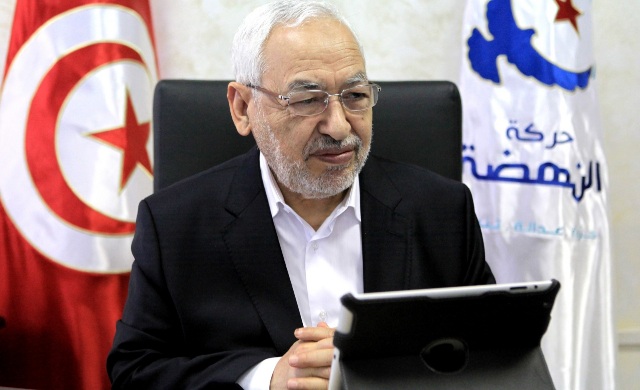
Within a systematic policy aimed at targeting political opposition and weaponising the judiciary as an instrument of repression, the Criminal Chamber specialised in terrorism cases at the Tunis Court of Appeal has issued its appellate rulings against a number of defendants in the so-called “Conspiracy Case 2”.
The rulings included increasing the prison sentence of Ennahda Movement leader Rached Ghannouchi to 20 years. The court also handed down 35-year sentences against several defendants tried in absentia, among them former ministers, former officials, and journalists.
The charges encompass forming a terrorist organisation, incitement to violence, and conspiring against state security, in addition to allegations of exploiting Tunisian territory and foreign countries to conduct training for terrorist acts. However, these accusations were brought in the absence of any clear material evidence proving the alleged conspiracy, underscoring their politically fabricated nature and their use as a tool to target the opposition.
Ghannouchi’s defence team declined to comment on the verdict, stressing that the trial was conducted remotely and that their client was deprived of his full right to defence, in what constitutes a flagrant violation of national laws and Tunisia’s international human rights obligations, particularly the right to a fair trial.
These rulings come amid a grave deterioration in the independence of the Tunisian judiciary and its exploitation by the regime of Kais Saied to pursue political opponents, thus placing Tunisia under intense scrutiny by the international community with regard to its legal and human rights commitments.
The latest judicial decision reflects a clear pattern of political repression, whereby criminal and security laws are transformed into instruments of pressure against the regime’s adversaries, while fundamental legal safeguards for defendants are marginalised.
Such unjust sentences raise profound questions about Tunisia’s ability to preserve democratic institutions after the revolution, the extent of its respect for the principle of separation of powers, and its protection of fundamental freedoms, at a time when the judiciary is increasingly viewed as a political tool rather than an independent institution.