







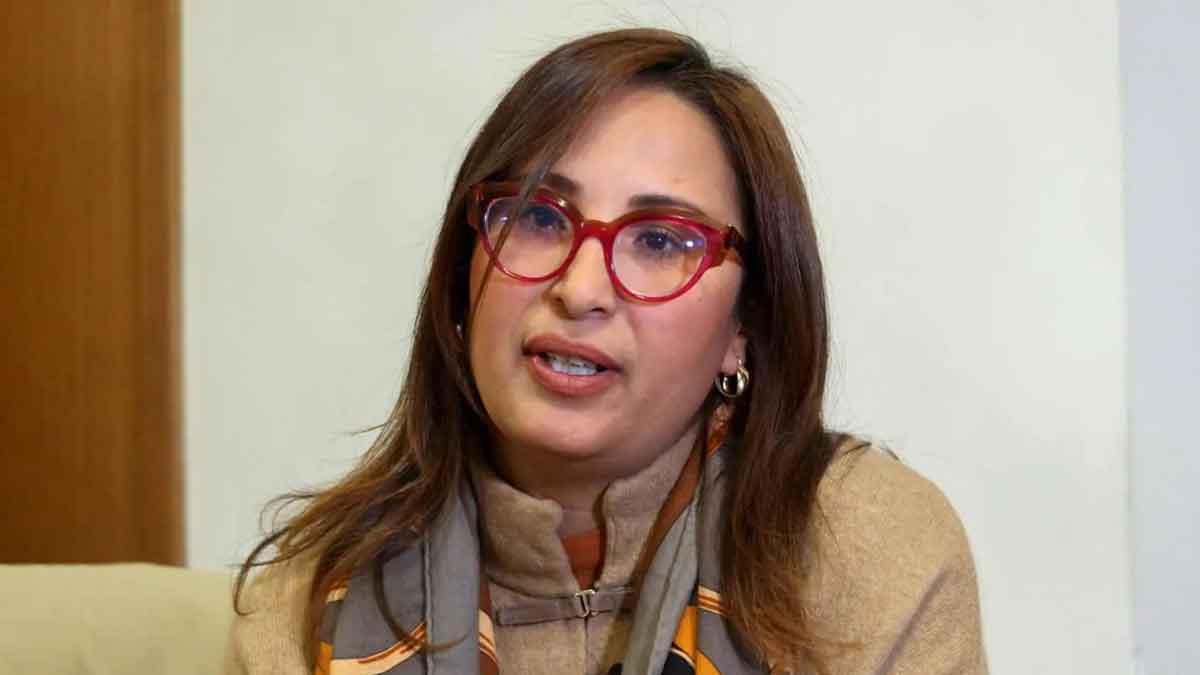
Tunisian political activist Shaimaa Issa has entered the second consecutive day of an open hunger strike in prison as her family has announced in a protest against the conditions of her detention and the manner in which she was handled during a peaceful demonstration last Saturday.
According to her family, the arrest was carried out in a manner they described as “humiliating and unjustified”, reflecting what has become a habitual approach by the Tunisian authorities towards dissenting voices.
From the moment she was taken into custody, the political prisoner insisted on her right to hold accountable all those involved in her arrest, which she says constituted a direct violation of her physical safety and her dignity.
Her detention was executed on the basis of a judicial warrant enforcing an 18-year prison sentence issued last week by the Tunis Court of Appeal in the so-called “conspiracy case”, a case that families of detainees argue is being used as a tool to eliminate political opponents rather than a legitimate pathway to justice.
A hunger strike is among the gravest forms of peaceful protest, often used by political figures when all avenues of redress, inside or outside prison, have been exhausted.
In Tunisia’s current climate, her strike stands as yet another signal of the absence of fair-trial guarantees, and of an expanding wave of arrests driven by cases whose legality is widely contested and whose procedures are marred by arbitrariness. To detain any citizen violently and without clear justification, while disregarding their dignity and right to defence, is a profound violation of the rule of law.
The execution of such severe judicial rulings in politically charged cases further entrenches a reality in which constitutional safeguards for public and individual freedoms are steadily eroding. Long prison terms handed down in cases lacking clear material evidence raise serious concerns that the judiciary is being deployed as an instrument to intimidate opponents, in a practice that contradicts the very essence of justice and the right of citizens to express themselves and engage politically without fear of reprisal.
Shaimaa Issa’s protest stands as a stark symbol of a system in which the space for freedoms is narrowing, and where the authorities exercise powers of arrest, prosecution, and punishment without clear limits or genuine legal oversight.
This incident reveals a critical moment for Tunisia that demands a serious reckoning with the escalating violations of human rights, and a renewed commitment to ensuring that every citizen enjoys sound legal procedures and a fair trial, far from the logic of repression and the silencing of opposition voices.