


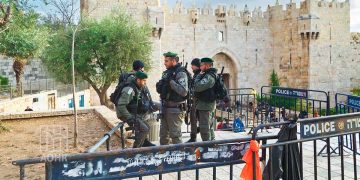






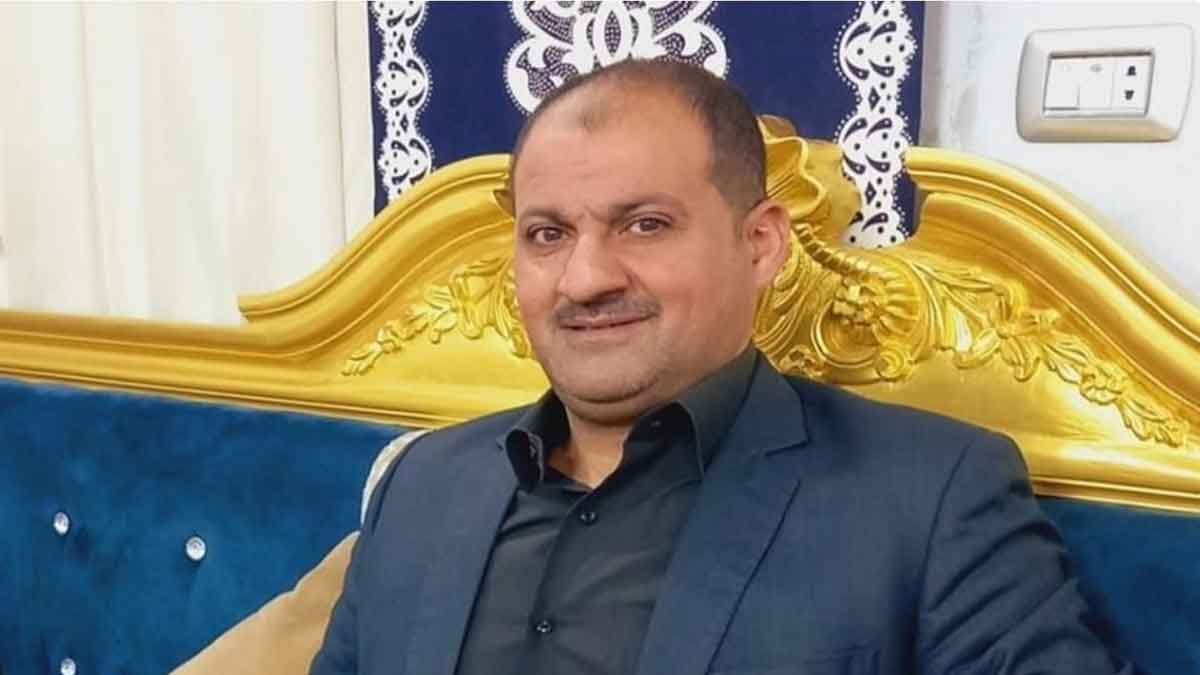
Jordanian security forces arrested political activist Kamel Al-Zoubi at dawn on Thursday, reportedly in connection with a case under the Cybercrime Law, according to local media platforms.
Al-Zoubi is known for his political engagement and posts criticising corruption, as well as his outspoken support for the besieged population of the Gaza Strip.
This arrest comes amid a broader context of increasing restrictions on freedom of expression in Jordan, where the Cybercrime Law is increasingly being used as a tool to criminalise political opinion and punish peaceful digital expression, contravening fundamental constitutional rights, foremost among them the right to express one’s views without fear of prosecution or detention.
This is not the first instance of Al-Zoubi being targeted, as he has previously faced multiple arrests linked to his political positions and opinions. The incident reflects a recurring pattern of harassment against activists, relying on repeated detentions instead of legal proceedings that adhere to principles of justice, necessity, and proportionality.
From a human rights perspective, the repeated arrest of an individual based solely on peaceful political views or expressions constitutes a direct violation of the right to personal freedom and effectively turns penal laws into instruments of political intimidation, rather than mechanisms for societal protection.
Furthermore, the expanded interpretation of “cybercrimes” to include political speech or expressions of solidarity with humanitarian causes undermines the principle of legal clarity and fosters an atmosphere of self-censorship and widespread fear.
Such arrests are seen as part of a broader decline in public freedoms, where peaceful political activity, especially on social media, has become fraught with the risk of prosecution, contradicting Jordan’s core obligations to uphold civil and political rights.
The arrest of Kamel Al-Zoubi thus raises serious questions about the future of freedom of expression in Jordan, the boundaries of loosely defined legal provisions, and whether these laws are truly being used to protect society, or merely to silence dissenting voices and suppress peaceful opposition, in a manner that clashes directly with fundamental human rights standards.