














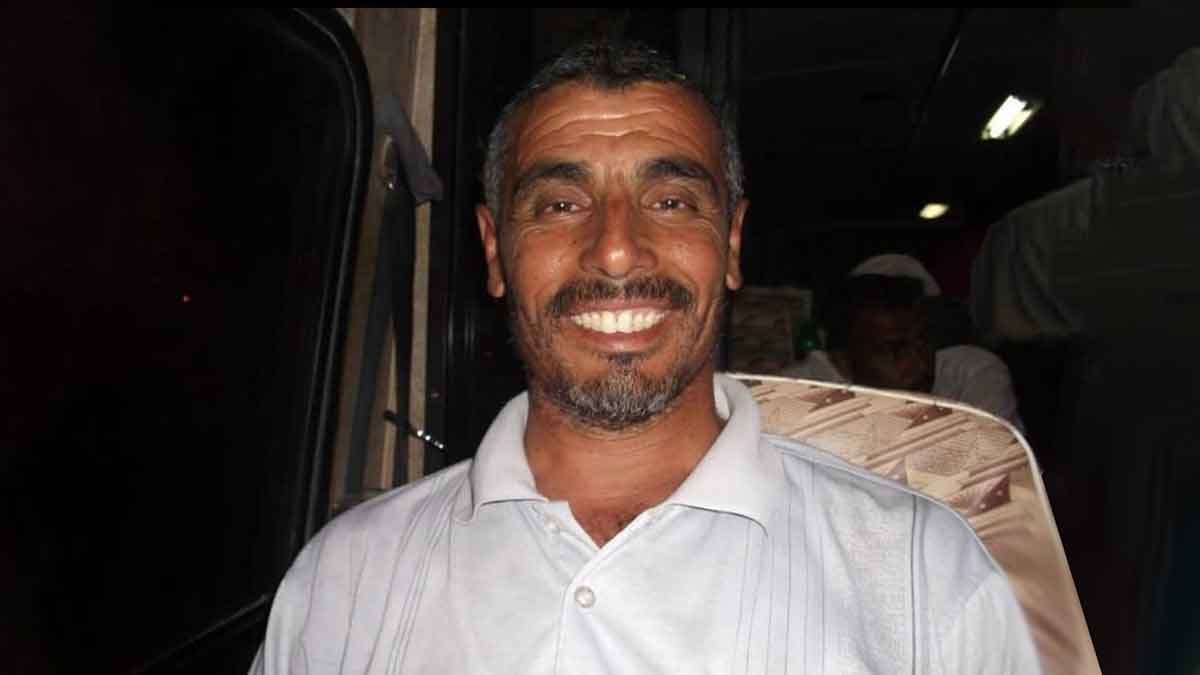
Egypt’s high-security Gamasa Prison has witnessed the death of political detainee Ibrahim Ahmed Abdel Rahman, known as “Abu Tasbeeh”, following a severe deterioration in his health during which he was denied adequate medical care inside his cell.
The 60-year-old had suffered in recent months from a blockage in the gallbladder that progressed into a cancerous tumour. He was transferred to Mansoura Hospital only at a late stage, where his death was announced.
Despite the serious decline in his condition, Ibrahim remained in his cell for an extended period without receiving the medical attention he urgently required, before eventually being taken, far too late, to Mansoura Hospital, where he passed away.
The deceased had been serving a 15-year sentence in the case known in the media as the “Ismailia Courthouse Fire”. He had been detained since 2014 amid a wave of politically-charged prosecutions that swept up hundreds of opposition figures following the events of 2013.
The circumstances surrounding Ibrahim’s death expose a structural failure within the detention system, in which delayed diagnosis and treatment routinely turn otherwise manageable illnesses into fatal ones.
The rising number of deaths inside Egyptian prisons in recent years offers a stark indicator of the worsening conditions of detention and the absence of even the most basic health standards. Denying ill prisoners access to specialised medical tests, restricting hospital transfers, and depriving them of essential medication have become entrenched practices across many facilities.
Reliance on simple painkillers in place of proper diagnosis and professional treatment, coupled with extreme overcrowding, poor ventilation and unhygienic conditions, compounds health risks and drives prisoners, particularly the elderly and the chronically ill, towards tragic ends.
While the Egyptian authorities continue to deny the existence of medical neglect, emerging testimonies and documented information reveal a vast gulf between the official narrative and lived reality. The absence of independent oversight of prisons, the refusal to apply medical parole mechanisms for those with severe or chronic illnesses, and allowing detainees to languish without timely medical intervention constitute fundamental breaches of international human rights law.
International standards, foremost among them the UN Standard Minimum Rules for the Treatment of Prisoners (the Nelson Mandela Rules), impose a clear obligation to ensure that detainees receive healthcare equivalent to that available outside prison. This includes regular medical examinations, access to specialist doctors, and treatment without delay.
These rules also place direct responsibility on the state to safeguard the lives of all individuals under its authority, recognising that detention does not strip them of their basic rights, including the right to health and the right to life.
Ibrahim Abdel Rahman’s death is one more case in a preventable chain of fatalities, lives that might have been saved had proper medical care been provided in time. His passing renews urgent calls for a radical overhaul of Egypt’s detention policies, for genuine independent monitoring of prisons, for the activation of medical parole mechanisms, and for strict adherence to international standards that explicitly prohibit exposing detainees to any form of cruel treatment or life-threatening neglect.