
















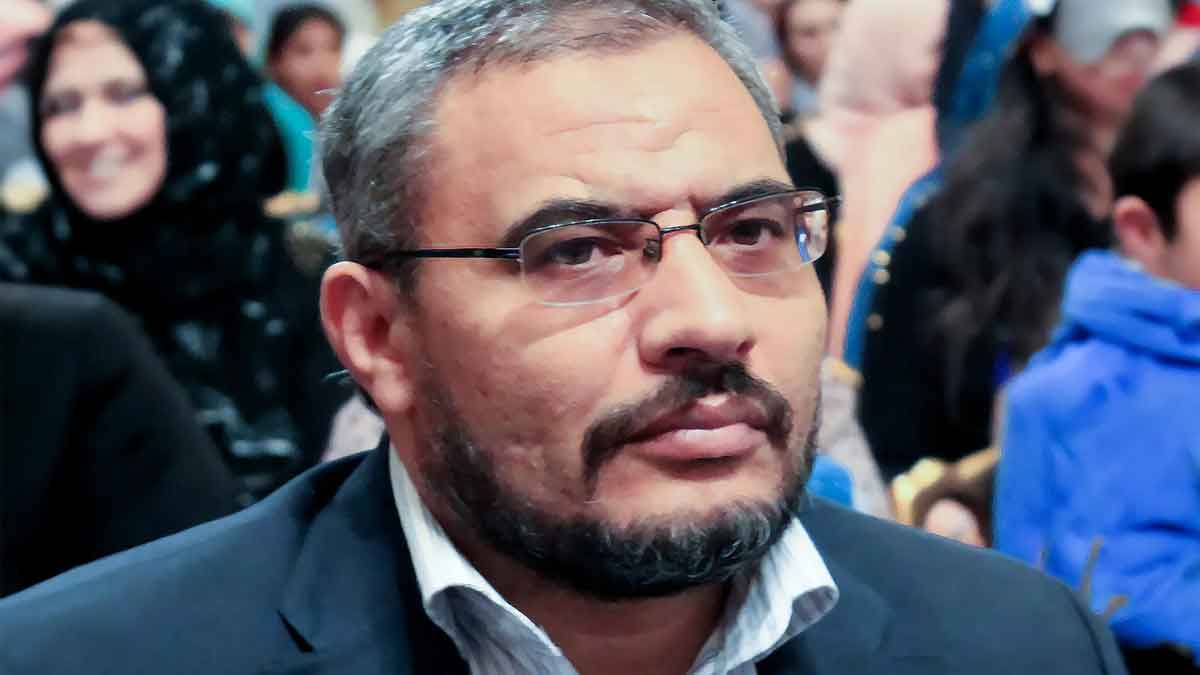
The Court of Appeal in the Tunisian capital has upheld a 15-year prison sentence handed down against Sahbi Atig, a senior figure in the Ennahda movement, in a case related to money laundering. The ruling confirms the first-instance judgment issued in June, and also maintains other sentences imposed on four additional defendants in the same case, ranging from prison terms to financial fines.
This decision constitutes a clear violation of the principles of a fair trial, having been issued without substantive pleadings and in the absence of the defendant, who boycotted the hearings after losing confidence in the value of participating in judicial proceedings that fail to guarantee even the minimum standards of defence rights. The lack of a public hearing and the deprivation of the defendant’s full right to defence undermine the very essence of criminal justice and strip the ruling of its human rights foundation.
The confirmation of such a harsh custodial sentence, based on events dating back to 2016, also reflects a breach of the principle of proportionality between the act and the punishment, and a disregard for the lengthy period separating the alleged facts from the trial. This empties justice of its rehabilitative purpose and transforms it into a purely punitive instrument.
The non-rights-based character of the ruling is further reinforced by the political context in which it was issued, as Atig’s prosecution coincides with a series of serious cases brought against political opponents, foremost among them prominent leaders of the Ennahda movement. The issuance of a new 15-year sentence, following an earlier 13-year sentence in a separate case, reveals a pattern of cumulative punishment against the same individual, suggesting the use of the judiciary to eliminate political adversaries under a legal guise.
This trajectory cannot be separated from the transformations Tunisia has witnessed since July 2021, when the structure of judicial authority was reshaped in ways that weakened its practical independence and curtailed the institutional safeguards meant to protect rights and freedoms, including the right to a fair and independent trial.
Despite the Tunisian authorities’ repeated assertions of judicial independence, the reality on the ground, most notably the heavy sentences imposed on opponents and their deprivation of fair trial guarantees, demonstrates a direct clash with fundamental human rights standards and a reproduction of punitive practices Tunisia experienced in earlier periods of its political history.
While the ruling against Sahbi Atig is not final and remains open to appeal before the Court of Cassation, his continued detention since 2023 amid this accumulating judicial process constitutes a grave infringement of the right to personal liberty. It reflects the return of a logic of political punishment through judicial tools, at a time when the judiciary is supposed to serve as a bulwark for rights, not a means of violating them.